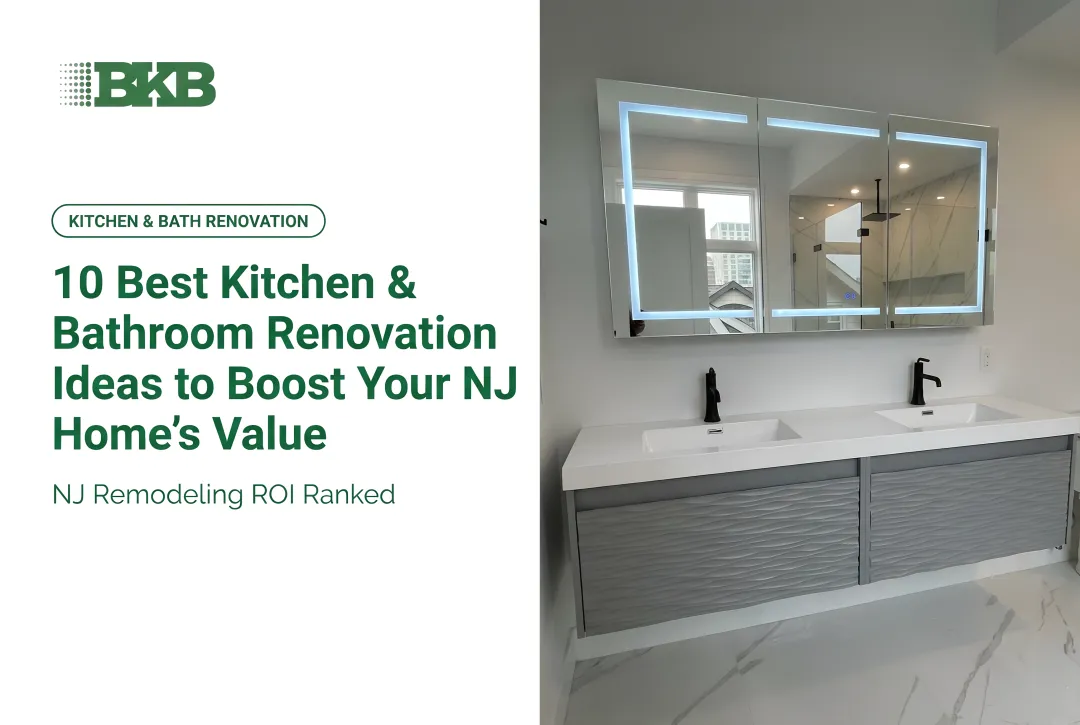
That's the reality for most NJ and NYC homeowners. But it's also why kitchen and bathroom renovations in this market deliver some of the strongest returns anywhere in the country. A midrange kitchen remodel in the Northeast recoups an average of 71.7% of its cost at resale, and bathroom renovations in NYC return approximately 70% according to Zillow — figures that hold up even in a competitive market.
This guide covers the 9 renovation ideas that consistently deliver in the tri-state area, selected based on design demand, space efficiency, and real impact on home value.
Key Takeaways
- Walk-in steam showers, freestanding tubs, and dual vanities are the top master bath upgrades for NJ/NYC resale value
- Open-concept kitchens, waterfall islands, and custom cabinetry deliver strong ROI in NYC co-ops and NJ homes
- Co-op board rules, NJ permit requirements, and tight square footage make planning critical before any work begins
- When kitchen and bath renovations share one contractor, scheduling tightens and finishes stay consistent across both rooms
- Working with a single team for cabinetry, countertops, and project management cuts handoff delays and keeps the budget in one place
What Makes Kitchen and Bathroom Renovations in NJ & NYC Unique
Renovating in the tri-state area isn't like renovating anywhere else. The regulatory and physical constraints here require a different approach from the start.
Common challenges NJ and NYC homeowners face:
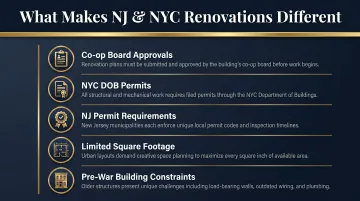
- NYC co-op/condo board approvals — Most layout changes require a formal alteration agreement, architectural plans, and board sign-off before a shovel touches anything. Co-op gut renovations can add 15–25% to total costs
- NYC DOB permits — Structural, plumbing, and electrical changes typically require an ALT2 filing with a licensed PE or RA, with processing timelines of 4–6 weeks on average
- NJ permit requirements — New Jersey's Uniform Construction Code requires permits for plumbing relocations, new circuits, and any structural modifications — even in single-family homes
- Limited square footage — Urban condos and suburban homes in dense NJ markets often have under 100 square feet of bathroom space, demanding designs that maximize every inch
- Pre-war building constraints — Fixed plumbing stacks, older electrical panels, and aging floor joists restrict what's structurally and mechanically possible without significant additional work
Those constraints don't eliminate ROI — they concentrate it. One Short Hills home sold for $620,000 above asking price after a bidding war, with move-in-ready kitchens and baths driving buyer competition.
The 9 ideas below are built for this market: real solutions for tight spaces, regulatory realities, and buyers who know exactly what they want.
9 Best Master Bathroom & Kitchen Renovation Ideas for NJ & NYC Homes
Each idea below was selected for four reasons: strong demand in the tri-state area, ability to maximize limited square footage, alignment with current design preferences, and proven contribution to resale value.
Idea 1: Spa-Style Walk-In Shower with Steam Feature
The spa shower has moved from luxury to expectation in NJ and NYC master bath renovations. More than half of NKBA-surveyed design experts now prioritize a larger shower over a bathtub, with steam, aromatherapy, and chromotherapy driving demand — 77% of those experts cite hospitality and resort experiences as the inspiration.
A well-executed spa shower typically includes:
- Large-format tiles (fewer grout lines, cleaner visual)
- Frameless glass enclosure
- Rain showerhead plus a handheld
- Integrated steam generator, usually installed within 25 feet of the shower
- Built-in niche or bench for function and aesthetics
Why it works in smaller urban bathrooms: A curbless, doorless shower design eliminates visual barriers and makes a tight bathroom feel significantly more open. Wet room configurations — where the shower zone flows directly from the bathroom floor — have grown to 16% of all renovated bathrooms, with 50% of homeowners citing better space utilization as the top reason.
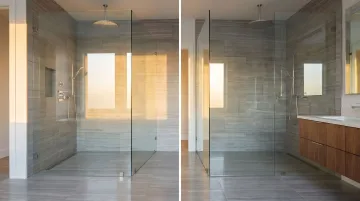
One planning note: steam showers require a fully enclosed enclosure, a vapor barrier behind walls and ceiling, and a sloped ceiling to prevent condensation drip. Adequate ventilation to protect adjacent spaces is non-negotiable — plan this with your contractor before any tile goes up.
Idea 2: Freestanding Soaking Tub as a Focal Point
A freestanding soaking tub does something an alcove tub never could: it makes a statement. Whether it's a classic clawfoot, a curved slipper design, or a contemporary flat-bottom pedestal, a freestanding tub repositions the bathtub as the anchor of the master bath rather than an afterthought tucked into a corner.
The NKBA 2024 Bath Trend Report identified freestanding and soaking units as the most popular tub category, with oval shapes leading the preference. Broadway Kitchens & Baths recommends MTI for freestanding tub installations, a brand known for craftsmanship and a wide range of configurations.
What to evaluate before committing:
- Drain location — Pre-war and older NJ/NYC buildings often have fixed drain rough-ins that won't align with a freestanding tub's floor-mount drain. Relocating requires permits in both NYC and NJ
- Floor load capacity — A filled freestanding tub can exceed 500 lbs. Older floor joists, particularly in NYC brownstones or pre-war co-ops, may need reinforcement before installation
- Plumbing access — Floor-mounted filler faucets require supply lines run through the floor, which may not be feasible without significant work in certain buildings
All three are worth assessing during planning — not after demolition.
Idea 3: Dual Vanities with Custom Cabinetry and Stone Countertops
69% of homeowners choose a two-sink setup in master bathroom renovations, according to the Houzz Bathroom Trends Study — and it's easy to understand why. Dedicated sink stations eliminate morning scheduling conflicts, allow each person to customize their storage, and create the kind of visual symmetry that photographs well and reads as luxury to buyers.
The design decisions that matter most in a dual vanity:
- Cabinet style — Wood-faced vanities lead at 62% of NKBA respondents; painted finishes remain strong. Available styles range from traditional shaker to contemporary flat-front
- Countertop material — Quartz (Caesarstone, Silestone, MSI Stone) is the practical choice: non-porous, no sealing required, stain-resistant. Marble offers a stronger aesthetic but needs sealing every 6–12 months and etches from acidic products. Quartzite is the middle ground — natural stone look with better durability
- Mirror and lighting integration — Individual sconces or backlit mirrors at each station improve task lighting significantly over a single centered fixture
For homeowners unsure which materials and styles fit their space and budget, Broadway Kitchens & Baths offers free design consultations at their Englewood, NJ showroom where you can see and compare options in person.
Idea 4: Heated Floors and Smart Lighting for Luxury Comfort
Radiant heated floors are one of the more underrated upgrades in NJ/NYC master baths. The cost is accessible — Angi reports average installation at $1,800, ranging from $600 to $4,600 depending on bathroom size and system type — and the daily experience, stepping onto a warm tile floor on a January morning, is something homeowners consistently rank as a top renovation satisfaction driver.
Electric mat systems work well in most residential bathrooms and are installed under tile during the renovation phase. They cannot be retrofitted after tile is laid, making pre-renovation planning essential.
Lighting deserves the same upfront attention. The NKBA 2026 Bath Trends Report found 91% of design experts cite lighting quality as a top consideration, with 92% calling task lighting essential. A well-layered plan includes:
- Ambient overhead fixture for general illumination
- Sconces or backlit mirrors at the vanity (one per sink station in dual vanity setups) for task lighting
- LED strip lights in shower niches, under floating vanities, or near the tub for accent
Smart dimmer switches and programmable scenes turn the bathroom into a genuinely different experience morning versus evening. Plan outlet placement and switch locations before walls are closed — reworking electrical after drywall is expensive.
Idea 5: Built-In Storage and Minimalist Layout Planning
In a 75-square-foot urban master bath, the difference between a space that feels cramped and one that feels intentional is almost always storage design. Clutter is the enemy, and built-in storage eliminates it.
High-impact storage solutions for NJ/NYC baths:
- Recessed shower niches — flush with the wall, no protruding shelves
- Floating vanities with integrated drawers and under-mount cabinet space
- Built-in linen cabinets between studs (possible in most exterior walls with planning)
- Medicine cabinets with integrated electrical for grooming tools
The minimalist approach — eliminating visual bulk from the floor plan and keeping lines clean — aligns directly with what 57% of NKBA respondents identify as their preferred contemporary bathroom aesthetic. Large-format flooring (fewer grout lines) and slab cabinet fronts reinforce this effect.
Practically, a minimalist layout in a constrained bathroom often means removing a bulky vanity and replacing it with a floating version, which also makes the floor easier to clean and creates the visual impression of more square footage. Every inch of floor visible from the doorway reads as space.
Idea 6: Open-Concept Kitchen Layout with Custom Cabinetry
Removing a non-load-bearing wall between a kitchen and dining room is one of the highest-impact moves available in NJ and NYC home renovations. It improves natural light, changes how the space feels during daily use, and — critically in dense urban markets — makes the home's total square footage work harder.
This renovation requires a structural assessment first. Load-bearing walls need temporary support, proper beam installation, and in most cases a permit. In NYC, this is an ALT2 filing; in NJ, structural changes require municipal approval. Factor in 4–8 weeks for permitting before any demolition.
How custom cabinetry maximizes an open layout:
- Floor-to-ceiling cabinet runs along perimeter walls create dramatic storage without eating into the open floor plan
- Integrated appliance panels (for refrigerators and dishwashers) keep the visual line clean in a space that's now visible from the living area
- Pull-out organizers, lazy Susan corner units, and dedicated pantry columns consolidate storage that used to live in separate spaces
Broadway Kitchens & Baths handles open-concept kitchen cabinetry design and installation, working with brands including UltraCraft, Plain & Fancy, and Hanssem to deliver semi-custom and fully custom configurations suited to the specific footprint. Their design team can create digital renderings before any work begins — useful for visualizing a layout change before committing to demolition.
Idea 7: Waterfall Island with Quartz or Marble Countertop
A waterfall island — where the countertop material continues vertically down one or both sides to the floor — has become one of the defining features of high-end NJ and NYC kitchen renovations. It reads as architectural detail rather than just a countertop, and it photographs extremely well for listings.
Material selection matters here more than anywhere else in the kitchen:
| Factor | Quartz | Marble |
|---|---|---|
| Hardness | Mohs 7 (very durable) | Mohs 3–5 (scratches more easily) |
| Porosity | Non-porous, no sealing needed | Porous, seal every 6–12 months |
| Stain resistance | High | Low — vulnerable to acids |
| Best for | High-traffic family kitchens | Showpiece aesthetic, lower-use kitchens |
| Cost range | $50–$150/sq ft | $75–$250/sq ft |
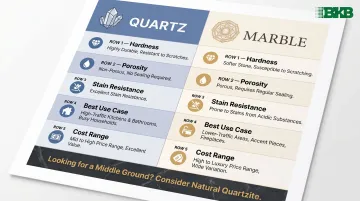
For a busy household kitchen, quartz (Caesarstone, Silestone, or MSI Stone — all available through Broadway Kitchens & Baths) is the more durable and lower-maintenance choice. Marble makes a stronger visual statement but demands discipline in daily use to avoid etching and staining.
NKBA data shows 62% of respondents favor natural quartzite as a top countertop material — a strong middle-ground option offering natural stone aesthetics with better durability than marble.
Idea 8: Smart Appliances and Under-Cabinet Lighting
The kitchen is the most electrical-intensive room in any home, and older NJ/NYC buildings — many with 60–100 amp panels — weren't designed with today's appliance loads in mind. Adding smart appliances without a panel assessment first is a common and expensive mistake.
According to the NKBA 2026 Kitchen Trends Report, 82% of respondents favor under-cabinet lighting and 72% highlight smart, spacious refrigerators as a leading trend. Popular smart kitchen additions include:
- Wi-Fi-enabled ovens and ranges (remote preheating, temperature monitoring)
- Panel-faced refrigerators integrated flush with cabinetry for a seamless visual line
- Powerful range hoods with variable speed controls (cited by 85% as popular)
- LED under-cabinet lighting on dimmer switches, providing task lighting without overhead glare
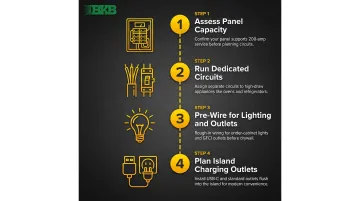
Electrical planning checklist before ordering appliances:
- Assess current panel capacity (upgrade typically costs $1,000–$2,500)
- Run dedicated circuits for high-draw appliances (oven, refrigerator, dishwasher)
- Pre-wire for under-cabinet lighting channels and specify outlet locations inside cabinets
- Plan USB and standard outlets in the island for device charging
Brands like Hansgrohe, Kohler, and Brizo — available through Broadway Kitchens & Baths — extend smart functionality into the kitchen sink and faucet as well, worth considering as part of a broader kitchen technology package.
Idea 9: Bold Backsplash with Statement Hardware
Not every high-impact upgrade requires a major budget. A bold backsplash combined with well-chosen hardware can transform a kitchen or bathroom's entire character without touching the cabinets, countertops, or layout.
Backsplash options getting the most attention in tri-state renovations right now:
- Zellige tile — handmade Moroccan clay tiles with natural color variation and texture
- Subway tile in herringbone pattern — classic but elevated through layout
- Book-matched stone slab — the countertop material extended to the wall for a continuous, dramatic look (favored by 75% of NKBA respondents who prefer slab or solid surface backsplashes)
- Natural quartzite — selected for backsplashes by 61% of NKBA Kitchen Trends respondents
Hardware finishes driving the current market:
- Matte black contrasts sharply against white or light wood cabinets and hides fingerprints
- Brushed brass and satin gold add warmth, pairing well with natural stone surfaces
- Polished nickel is seeing a resurgence in pre-war and vintage-adjacent aesthetics
When renovating kitchen and bath simultaneously, carry one or two hardware finishes across both spaces. It creates a through-line that makes the home feel intentionally designed rather than room-by-room assembled.
How to Choose the Right Renovation Ideas for Your NJ or NYC Home
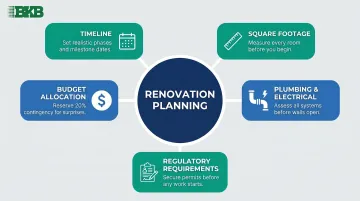
The most expensive mistake NJ and NYC homeowners make is choosing renovation ideas based entirely on aesthetics. Mid-project, they discover a planned layout change conflicts with a plumbing stack, a load-bearing wall, or a co-op rule that prohibits wet work above certain floors.
Evaluate these factors before finalizing any renovation plan:
- Available square footage — Which ideas are physically feasible given your floor plan? A freestanding tub needs clearance on at least three sides; a dual vanity needs wall length
- Existing plumbing and electrical — Where are the stacks? What's the panel capacity? Can drains be relocated without major structural disruption?
- Regulatory requirements — NYC projects need DOB permits and often board approval (plan 1–3 months for co-op review). NJ projects require municipal permits for plumbing, electrical, and structural changes
- Budget allocation — Labor typically represents 40–60% of a renovation budget in this market; allocating budget between materials and installation requires knowing your scope first
- Timeline — Permit processing in NYC adds 4–6 weeks minimum. Factor material lead times (4–10 weeks for custom cabinetry) into any realistic project schedule
Working with a contractor who knows the tri-state market makes a real difference. Broadway Kitchens & Baths operates in both union and non-union environments, coordinates plumbing, electrical, and carpentry trades under a single project schedule, and handles everything from field measurements through punch-list. Design consultations are free — a practical starting point before scope, budget, or materials are locked in.
Conclusion
The best kitchen and master bathroom renovations in NJ and NYC share a few things in common: they work with the space rather than against it, they use materials that hold up in real daily use, and they're planned around the regulatory and structural realities of tri-state area homes.
Whether you're prioritizing a spa-style steam shower, a waterfall island in quartz, or dual vanities with custom cabinetry, the decisions that matter most happen before any work begins — in the design and planning phase.
Broadway Kitchens & Baths helps NJ and NYC homeowners navigate these decisions, with showrooms in Englewood, NJ and Manhattan. The full-service team handles everything from design consultation to final walkthrough — including cabinetry, countertops, tile, and plumbing fixtures.
Ready to get started? Call +1 201-567-9585 to schedule a free consultation.
Frequently Asked Questions
How much does a master bathroom renovation cost in NJ or NYC?
In NYC, bathroom renovations range from $3,000–$10,000 for basic updates to $25,000–$75,000+ for full gut renovations; co-op and condo projects typically add 15–25% to costs. Complex renovations can exceed $200,000 depending on scope and building type. Broadway Kitchens & Baths offers consultations at their Englewood, NJ and Manhattan showrooms to scope your project accurately.
What kitchen renovation ideas add the most resale value in NJ and NYC?
Open-concept layouts, custom cabinetry, and quality stone countertops consistently generate the strongest ROI in the NJ/NYC market. Cohesive design across both kitchen and bath — particularly when renovated together — maximizes overall return at resale.
Do I need permits for a kitchen or bathroom renovation in NJ or NYC?
Yes, in most cases. Any plumbing relocation, new electrical circuits, or structural changes require permits in both NJ and NYC. NYC projects often require an ALT2 filing with a licensed professional. Co-op and condo owners also typically need board approval before work begins.
Should I renovate my kitchen and bathroom at the same time?
Combining projects with a single contractor reduces scheduling complexity, can lower overall labor costs, and ensures design consistency across both spaces. Broadway Kitchens & Baths manages simultaneous kitchen and bath renovations as a single turnkey project.
How long does a kitchen or master bathroom renovation take in NJ or NYC?
Bathroom renovations typically run 3–6 weeks for standard work and 6–12 weeks for full gut renovations. Kitchen renovations take 8–14 weeks in construction, plus 4–10 weeks for planning, permitting, and material lead times.
What is the difference between a kitchen renovation and a remodel?
A renovation updates existing elements — finishes, cabinets, fixtures — without altering the room's structure or layout. A remodel involves structural changes like moving walls or reconfiguring plumbing, and carries different permit requirements in NJ and NYC.