The tension is real: you want a spa-calibrated bathroom, but you're weighing costs, layout constraints, and long-term resale value. The good news is that 2026 offers more viable paths than ever — from sculptural freestanding tubs and Japanese soaking designs to smart hydrotherapy systems and accessibility-forward conversions.
This guide covers 10 of the best bathtub remodeling ideas for 2026, the design trends shaping them, and what you need to know before committing to a scope.
Key Takeaways
- Bathtub remodeling in 2026 is driven by wellness, minimalism, and multi-functional bathroom design
- The 10 ideas span practical conversions, space-saving soaking tubs, and tech-forward upgrades — giving homeowners and designers a full range of options at every budget
- Cosmetic refreshes start around $340; full structural conversions can run $30,000+
- Top 2026 trends: fluted tile, warm earth tones, unlacquered brass, and integrated mood lighting
- Structural changes involving plumbing relocation or heavy tub installations require professional planning from the outset
Why Your Bathtub Deserves a 2026 Upgrade
Bathroom renovation spending tells its own story. The North American bath remodeling market hit $72.23 billion in 2024, with NAHB projecting residential remodeling activity to grow 3% in 2026. Homeowners aren't just spending — they're investing with purpose.
The post-pandemic shift toward wellness-focused interiors has reshaped what people want from their bathrooms. According to the 2025 Houzz Bathroom Trends Study, 36% of renovated bathrooms now include wellness-oriented features, with soaking tubs and spa baths appearing in 18% of projects.
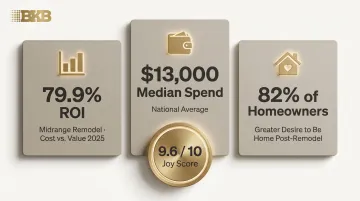
That appetite comes with real budget commitment. The same Houzz study found the national median spend for bathroom renovations at $13,000, with major remodels averaging $22,000.
The financial case is just as compelling. The 2025 Cost vs. Value Report puts midrange bathroom remodel ROI at 79.9% — making it one of the stronger renovation investments a homeowner can make. Beyond resale, the NAR's 2025 Remodeling Impact Report found that 82% of homeowners report a greater desire to be home after completing a bathroom remodel, with a Joy Score of 9.6 out of 10.
The bathtub is often the room's defining fixture — and in 2026, the options for upgrading it are more varied, more accessible, and more wellness-driven than ever.
10 Best Bathtub Remodeling Ideas for 2026
These ideas span a range of budgets, bathroom footprints, and design styles — whether you're doing a targeted cosmetic refresh or a full gut renovation.
1. Freestanding Soaking Tub as a Focal Point
Swapping a built-in alcove tub for a freestanding soaking tub transforms a primary bathroom almost instantly. Centered under a window, skylight, or pendant light, the visual impact is hard to replicate with any other single change.
For 2026, the strongest material choices are:
- Matte white or matte black acrylic — lightweight, warm to the touch, accessible price point
- Stone resin — heavier and more sculptural, with excellent heat retention
- Colored exteriors in earthy tones — warm greige, terracotta, or sage for a design-forward statement
Broadway Kitchens & Baths sources freestanding tubs from MTI, a preferred brand for quality and durability, alongside plumbing fixtures from Kohler, Rohl, and Hansgrohe to complete the look.
2. Tub-to-Walk-in Shower Conversion
This conversion makes the most sense when a tub goes unused, bathroom square footage is limited, or accessibility is a priority. The process involves plumbing relocation, new drainage installation, waterproofing, and tile — so it's not a DIY project.
ROI data from Angi puts average returns at 60%, with mid-range material choices climbing to 74%. But buyer preferences add a layer of nuance: 72% of first-time buyers consider having both a shower and bathtub in the primary bath "essential" or "desirable." If this is the only tub in the home, keep one elsewhere for resale protection.
When this conversion makes clear sense:
- Second bathroom with an unused tub
- Primary bath with a separate soaking tub already present
- Accessibility-driven renovation where a walk-in shower is safer and more practical
3. Built-in Tub with Fluted Tile Surround
Fluted (ribbed) wall tile gives an existing alcove tub setup an immediate textural upgrade without touching the layout or the plumbing. The cost is a fraction of a full replacement, and the effect reads as custom.
The look works best when paired with:
- Integrated recessed niche shelving (for shampoo, candles, accessories)
- Matte grout in a tonal or contrasting shade
- Coordinating floor tile that echoes the surround's texture or color
Broadway Kitchens & Baths handles wall and floor tile installation across its full bathroom renovation scope, with options in stone, porcelain, ceramic, and glass finishes.
4. Japanese Ofuro Deep Soaking Tub
The Ofuro is a compact but deep tub designed for full-body immersion rather than horizontal lounging — typically 24–27 inches deep versus the standard 14–16 inches. It takes up less floor space than a Western soaking tub but delivers a genuinely different bathing experience.
Material choices align well with 2026's biophilic design direction:
- Hinoki wood — traditional Japanese cedar with a distinct aromatherapy quality
- Acrylic — the most practical option for moisture management and maintenance
- Stone composite — the most sculptural, best suited for minimalist interiors
This tub works best in bathrooms where a separate shower is already present, since the Ofuro is purely for soaking.
5. Spa Wet Room with Tub and Open Shower Combo
A wet room is a fully waterproofed bathroom space where a freestanding tub and open shower coexist without barriers or enclosures. Houzz data shows wet rooms now account for 16% of renovated bathrooms, with half of homeowners choosing them to optimize space and 29% citing aesthetics.
Practical requirements for a wet room:
- Continuous large-format floor tile with consistent slope toward linear drains
- Full waterproofing membrane on all walls and floors (not just the shower zone)
- Ventilation sized for the full room, not just a shower enclosure
- Proper linear drain placement to handle full-room water flow
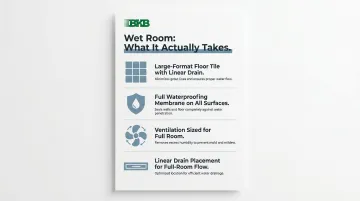
This is a structural project. It requires waterproofing expertise, plumbing coordination, and tile installation that work as a system — not as independent trades.
6. Accessible Walk-in Tub for Aging in Place
Walk-in tubs feature a low-threshold door entry, built-in seating, grab bars, and optional hydrotherapy jets. For aging-in-place renovations or multi-generational households, they're among the most practical fixture upgrades available.
According to the 2025 Houzz Bathroom Trends Study, 68% of homeowners now consider special needs in their bathroom projects, with 41% focused on aging household members. The aging-in-place market is projected to reach $13.5 billion — a figure that reflects real demand, not just demographic projection.
Multi-unit developers are responding in kind, specifying walk-in tubs early in design to meet broader accessibility standards across entire buildings rather than retrofitting individual units.
7. Clawfoot Tub Revival with Contemporary Finishes
The classic clawfoot tub gets a 2026 update through finish and context, not form. The silhouette stays; everything around it changes.
How the 2026 version looks:
- Exterior in matte black, warm greige, or deep navy
- Feet in unlacquered brass or brushed bronze (not chrome)
- Floor-mount faucet with a handheld attachment
- Paired with zellige-style wall tile or simple subway tile in a warm white
This approach works especially well in pre-war apartments, brownstones, or older homes. A fully contemporary aesthetic in those spaces can feel forced; the clawfoot's antique silhouette paired with updated finishes holds the tension between old and new without resolving it too neatly.
8. Smart Tub with Chromotherapy and Hydrotherapy
Smart tub technology in 2026 means more than jets. Current features include:
- Programmable water temperature and fill depth (preset and saved)
- Chromotherapy lighting with color cycle options
- Air jet vs. whirlpool systems (or both)
- App and voice control integration
Kohler's lineup illustrates the range: their Stillness bath includes PerfectFill auto-fill with temperature presets and Kohler Konnect app control. The global smart bathroom market is valued at $8.8 billion in 2026, growing at 11% annually — technology integration is no longer a luxury-only feature.
This is primarily a luxury residential and high-end multi-unit application, with pricing ranging from under $1,500 for entry-level hydrotherapy to $16,500+ for fully appointed smart systems.
9. Stone or Concrete Vessel Tub
Hand-carved stone and concrete freestanding tubs function as sculptural objects first, fixtures second. In minimalist or organic-modern bathrooms, a travertine, basalt, or terrazzo tub is the room's entire design statement.
One thing that cannot be skipped: structural assessment. The load numbers are significant:
- A filled 60-inch soaking tub adds 660+ lbs of water weight alone
- Stone resin adds 150–300 lbs beyond what acrylic would weigh
- Standard residential floors are rated for 40–60 PSF
- Freestanding tubs concentrate all that weight into small contact points
Floor reinforcement — sistered joists, blocking, or engineered structural members — is frequently required.
This conversation needs to happen with your contractor before you select the tub, not after.
10. Tub Alcove with Arched Niche and Mood Lighting
An arched architectural frame around an existing built-in tub delivers one of the strongest visual returns for the scope of work involved. The structure — a curved drywall opening with tile inlay — creates a dramatic spa effect without relocating a single pipe.
The full design composition:
- Marble, zellige, or handmade tile inside the arch interior
- Recessed LED strip lighting along the arch perimeter
- Wall-mounted tub filler replacing a deck-mount faucet
- Floating side shelves for candles, towels, and bath accessories
The result reads as a fully custom installation. The actual scope is manageable for an experienced renovation team.
Key Design Trends Shaping Bathtub Remodels in 2026
Finishes and Materials
Chrome is largely behind us. The dominant metal finish for 2026 is warm — unlacquered brass, brushed bronze, and antique gold. These tones work alongside earthy neutral palettes: warm white, greige, terracotta, and dusty sage lead bathroom color palettes for the year.
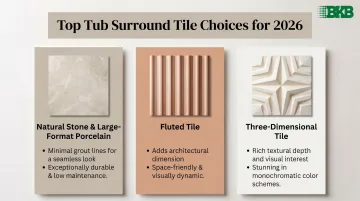
For surfaces, Porcelanosa's 2026 Trendbook identifies limestone- and travertine-inspired tile as the most popular choice, delivering tactile texture through stone-look designs. For tub surrounds, the most-used options include:
- Natural stone and large-format porcelain — clean, durable, and easy to keep grout lines minimal
- Fluted tile — adds dimension without overwhelming smaller spaces
- Three-dimensional tile — textural detail that reads well in monochromatic schemes
Biophilic Design
The "biophilic bathroom" trend brings natural textures, wood-adjacent finishes, and organic shapes into the wet zone. Hinoki wood accents, live-edge stone shelving, and natural fiber textiles make bathrooms feel connected to the outdoors. Ofuro soaking tubs and stone vessel tubs fit naturally within this aesthetic — their organic materials and minimal profiles reinforce the connection to nature that defines the trend.
Monochromatic Tonal Design
One of the cleaner 2026 looks: tub, tile, grout, walls, and fixtures existing within the same tight color palette. A warm white tub against warm white fluted tile with matching matte grout and brass fixtures reads as effortlessly high-end. The result is a bathroom that feels intentional rather than assembled.
How to Plan and Budget Your Bathtub Remodel
Core Planning Decisions
Before selecting a design, work through these fundamentals:
- Layout constraints — Can your current plumbing location support the new tub placement, or does it require relocation?
- Structural load — Heavy tubs (stone, concrete, stone resin) may require floor reinforcement; get this assessed early
- Permitting — Plumbing relocation and electrical changes typically require permits; requirements vary by municipality
- Fixture coordination — Tub filler style, floor-mount vs. wall-mount, and valve placement all need to be decided before tile is set
Budget Tiers
| Scope | Typical Cost Range |
|---|---|
| Refinishing / reglazing | $337–$631 |
| Tub-to-shower conversion | $1,200–$8,000 (avg $3,000) |
| Full tub replacement (all-in) | $1,300–$14,700 (avg $5,700) |
| Wet room or structural conversion | $2,000–$30,000 |
| Midrange full bathroom remodel | ~$25,251 |
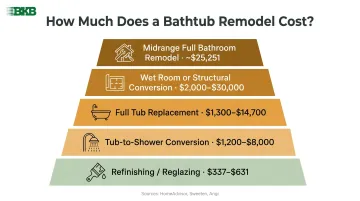
Sources: HomeAdvisor 2025, Sweeten 2025, Angi 2026
Working with a Full-Service Partner
For projects involving plumbing relocation, heavy fixtures, or full wet room conversions, a full-service remodeling partner reduces timeline overruns and prevents costly mid-project surprises.
Broadway Kitchens & Baths manages bathroom renovations from initial design consultation through final completion, with in-house crews handling tile installation, plumbing fixture installation, framing, and demolition. Their team sources fixtures from Kohler, Hansgrohe, Rohl, and Brizo, with MTI as their preferred tub brand.
For multi-unit projects — condos, co-ops, apartment buildings — they coordinate directly with other trades for a single point of accountability from field measurements through punch-list.
Conclusion
The best bathtub remodel is one that fits how you actually use your bathroom — your lifestyle, layout, budget, and how long you plan to stay in the home all shape the right direction. The right idea depends on your lifestyle, your layout, your budget, and how long you plan to stay in the home.
If you're ready to explore what's possible, Broadway Kitchens & Baths offers free design consultations at their Englewood, NJ showroom, with project capabilities spanning Bergen County, Hudson County, Manhattan, Brooklyn, and the greater tri-state area. Contact their team to schedule a consultation and walk through your options in person.
Frequently Asked Questions
Frequently Asked Questions
What's the average cost to remodel a bathtub?
Basic refinishing runs $337–$631 on average. A full tub replacement with new surround tile and plumbing typically lands between $1,300 and $14,700 (average around $5,700), depending on tub material, plumbing scope, and whether structural work is involved.
Can I renovate a bathroom for $5,000?
Yes — with realistic expectations about scope. At $5,000, you can cover refinishing, new fixtures, and a surround tile refresh. A full tub replacement with plumbing relocation, or any wet room conversion, will exceed this budget.
Is $10,000 enough for a bathroom remodel?
$10,000 covers a solid mid-range remodel — a new freestanding tub, updated surround tile, and basic plumbing work. High-end materials, a full gut renovation, or a wet room conversion will push beyond that range.
What is the hottest bathroom trend in 2026?
Spa wet rooms with freestanding tubs, fluted tile surrounds, and warm earth-tone palettes are the defining aesthetic direction. Warm metals — unlacquered brass and brushed bronze — have largely replaced chrome across fixtures and hardware.
What's the difference between bathtub refinishing and full replacement?
Refinishing applies a new surface coating to your existing tub — lower cost, no plumbing work, and ideal for surface-level cosmetic fixes. Full replacement is required for structural damage, outdated layouts, or upgrading to a fundamentally different tub style (freestanding, Ofuro, walk-in).
How long does a bathtub remodel typically take?
A basic refinish takes 3–5 hours plus a 24-hour cure time. A tub swap with new surround tile typically takes 1–2 weeks. A full wet room or structural conversion runs 3–6 weeks depending on permitting, plumbing scope, and materials lead time.