Introduction
Commercial kitchen renovations in NJ and NYC operate under a different cost structure than anywhere else in the country. The Gordian RSMeans City Cost Index for Q2 2024 places NYC at roughly 25.6% above the national average—and that's the overall construction index. The labor installation index hits nearly 1.684, meaning the trades you need most (plumbers, electricians, sheet metal workers) run substantially higher here than in most U.S. markets.
The cost range for a commercial kitchen renovation in this region runs from $20,000 for a surface refresh to $400,000+ for a complete gut renovation. But the spread within those tiers is wide, and misreading a single variable—existing infrastructure condition, compliance requirements, or whether union labor applies to your building—can blow a budget before demolition even starts.
That's exactly what this guide addresses: realistic pricing tiers for NJ and NYC, the specific factors that push costs up, where renovation dollars actually land, and the planning mistakes that routinely turn a $150,000 project into a $220,000 one.
Key Takeaways
- Cost range: $20,000 (cosmetic refresh) to $400,000+ (full gut renovation) in NJ and NYC
- Biggest cost drivers: MEP upgrades, commercial equipment, and permitting/compliance—not surface finishes
- NYC premium: Consistently higher than NJ due to union labor, complex multi-agency permitting, and elevated contractor overhead
- Budget in a minimum 15–20% contingency reserve—cost overruns on commercial renovations are the norm, not a rare surprise
How Much Does a Commercial Kitchen Renovation Cost in NJ & NYC?
There is no single average cost for a commercial kitchen renovation. Scope, existing conditions, and location within the region each shift the number substantially.
The most common budgeting error: operators anchor to a figure they read online, then discover that the prior tenant's plumbing doesn't meet current code, the electrical panel is undersized, or the hood system doesn't pass FDNY inspection.
Here's how the tiers break down in this market.
Cosmetic and Surface Refresh: $20,000–$75,000
This tier covers work that changes how a kitchen looks without touching its infrastructure:
- Countertop and cabinetry replacement
- New flooring and wall finishes
- Updated lighting fixtures
- Minor equipment swaps (replacing a single unit, not a full fit-out)
- No structural changes, no MEP modifications
Best for: Existing operators refreshing an aging aesthetic without changing layout, workflow, or kitchen capacity. If the bones are solid and the systems pass inspection, a cosmetic refresh can extend a kitchen's useful life by several years at a fraction of full renovation cost.
Partial Renovation: $75,000–$175,000
This is the most common tier for second-generation restaurant spaces in NJ—spaces where some infrastructure exists but needs targeted upgrades to meet current use or code:
- Layout reconfiguration
- Hood ventilation addition or upgrade
- Electrical panel upgrade
- New commercial equipment (partial replacement, not full fit-out)
- Updated cabinetry, countertops, and finishes
- Permit-required compliance work
This tier is where budget surprises are most common. Once walls open up, the issues most likely to add cost are undersized electrical panels, non-compliant grease trap installations, and ventilation that doesn't meet current code — none of which are visible during lease negotiation.
Full Gut Renovation: $175,000–$400,000+
A full gut renovation starts from bare walls and makes financial sense when:
- Existing MEP systems are at end of life or non-compliant
- Layout is fundamentally incompatible with planned operations
- The space was not previously a commercial kitchen
- Walk-in refrigeration, custom cabinetry, and a full exhaust system are required
NYC projects in this tier frequently approach or exceed $400,000. Older building constraints, co-op or condo board approval requirements, and more demanding Department of Health inspections add cost and timeline that NJ projects typically don't face at the same scale.
Best for: Operators converting raw or non-kitchen spaces, or those inheriting infrastructure too outdated to patch — where building to spec from the start is cheaper than repeated mid-project change orders.
Key Factors That Drive Up Renovation Costs in NJ & NYC
Pricing in this region is shaped by a specific set of technical, regulatory, and market factors. Knowing what drives costs—before budgeting begins—prevents the expensive mid-project revisions that catch operators off guard.
Location: NJ vs. NYC Cost Differential
NYC carries a verifiable cost premium over both NJ and the national average. The Q2 2024 Gordian data puts the overall NYC premium at roughly 25.6%—but the labor component is where the gap is most pronounced.
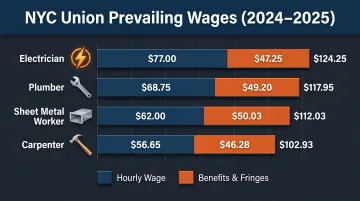
NYC union prevailing wages (effective July 1, 2024–June 30, 2025) from the NYC Comptroller's Construction Worker Prevailing Wage Schedule:
| Trade | Hourly Wage | Benefits | Total |
|---|---|---|---|
| Electrician (day shift) | $62.00 | $62.25 | $124.25 |
| Plumber | $74.95 | $43.00 | $117.95 |
| Sheet Metal Worker | $53.60 | $58.43 | $112.03 |
| Carpenter (Commercial) | $55.05 | $47.88 | $102.93 |
NJ projects—particularly in Bergen, Hudson, and Essex Counties—still carry regional premiums over national averages. But the gap between NJ and NYC on mid-to-large commercial projects can be substantial when union labor requirements apply.
MEP Systems: The Hidden Budget Driver
Mechanical, electrical, and plumbing upgrades are frequently the single largest line item in any commercial kitchen renovation involving infrastructure change. Operators consistently underestimate this because MEP costs are invisible until walls open.
What MEP work covers:
- New gas or electric service
- Electrical panel upgrades to support commercial equipment loads
- Plumbing rerouting
- Hood ventilation and fire suppression systems
- HVAC and makeup air
In NYC, gas service upgrades alone can add months to a project. Con Edison timelines for service requiring excavation can run up to 90 days from initial inspection. Some operators are moving to all-electric kitchen designs specifically to sidestep this delay—a shift that NYC's Local Law 154 is already accelerating by phasing in all-electric requirements for new buildings.
Permits, Inspections, and Compliance
NYC commercial kitchen renovations require coordination across four agencies:
- DOB: Plan approvals and building permits
- FDNY: Pre-operational inspections, Certificates of Fitness
- DOHMH: Food Service Establishment Permit ($280, plus $25 for frozen desserts); operations can begin on the 22nd day after application, pending inspection
- DEP: Grease interceptor and air pollution control compliance
NJ municipalities require building permits, health department approval, and fire marshal sign-off. The process is generally less complex than NYC, but requirements vary meaningfully by county and municipality.
That complexity has a cost—but it's rarely the permit fees themselves, which are often modest. The cost multipliers are the professional fees—architects, engineers, and in NYC, expeditors—required to navigate approvals and inspections on schedule.
Union vs. Non-Union Labor
In NYC, commercial renovation work in many building types is subject to union labor requirements. The prevailing wage rates above show what that means in practice: a plumber runs $117.95 per hour all-in before markup. Across the hours required for a full MEP overhaul, that compounds quickly.
Broadway Kitchens & Baths operates in both union and non-union environments and handles the required insurance documentation for each. For operators who aren't sure which requirements apply to their specific building or project type, that experience matters early in the planning process—ideally before a contractor is ever mobilized.
Kitchen Size and Scope of Change
Cost per square foot drops as total project size increases. But raw square footage matters less than the scope of infrastructure change. A 500 sq ft kitchen requiring a full MEP overhaul will cost more than a 1,200 sq ft kitchen needing only cosmetic updates. Plan your budget around what's changing, not just how much space you have.
Full Cost Breakdown: Where Your Renovation Budget Actually Goes
The sticker price on equipment is what most operators see first. The actual renovation budget is built from multiple line items—many of which are invisible until the project is underway.
Construction, Demolition, and Structural Work
This line item includes:
- Demo of the existing build-out
- Structural modifications (opening walls, raising ceilings for ventilation clearance)
- New flooring and general construction labor
Costs are calculated per square foot and vary significantly between NJ and NYC, with NYC's labor premium directly affecting this number.
MEP (Mechanical, Electrical, Plumbing) Upgrades
Often the largest single line item when any infrastructure change is involved. Scope typically includes:
- Gas or electric service upgrades
- Plumbing rerouting and new rough-in
- Hood ventilation, ductwork, and fire suppression systems
- HVAC and makeup air systems
The scope of MEP work is what separates a $90,000 partial renovation from a $180,000 one on paper-identical floor plans.
Commercial Kitchen Equipment
Equipment costs for a fully outfitted commercial kitchen vary widely by concept and volume:
- Basic setup: $40,000–$75,000 (ranges, refrigeration, prep tables, basic dishwashing)
- Mid-volume operation: $75,000–$120,000
- High-volume or specialized: $120,000–$150,000+
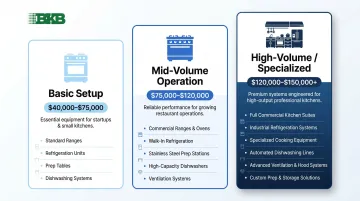
Equipment is a one-time cost with periodic replacement cycles. Operators tend to research this line item most carefully, which can create budget blind spots when MEP and compliance costs haven't been scoped yet.
Cabinetry, Countertops, and Finishes
standard practice in NYC for complex projects)
- Code consultant fees where compliance issues require resolution
Contingency reserve: Budget overruns on commercial kitchen renovations are not rare outliers—they're common. Hidden infrastructure problems in older buildings, permit delays that extend carrying costs, and mid-project code compliance discoveries are all real risks in NJ and NYC. Build a minimum 15–20% contingency into any commercial kitchen renovation budget before the project starts.
What Most People Get Wrong When Budgeting a Commercial Kitchen Renovation
Anchoring to Equipment Costs Alone
Most operators research equipment prices first and build their mental budget around that number. Equipment matters, but it's only one component of total renovation spend. The structural, MEP, and compliance costs are where budgets break: they're frequently left out of initial planning entirely.
Skipping the Contingency
In NJ and NYC commercial kitchens, budget overruns have specific causes:
- Hidden infrastructure: Older buildings frequently conceal failing plumbing stacks, undersized electrical service, or non-compliant gas connections that don't show up until demolition
- Permit delays: Extended review timelines extend the closure period and carrying costs
- Mid-project discoveries: Inspectors identify code compliance issues mid-project, forcing scope changes after work has already begun
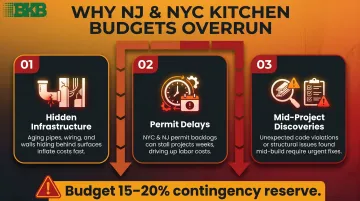
A 15–20% contingency reserve isn't padding. It's an accurate reflection of how these projects actually unfold.
Ignoring the Cost of Downtime
Contingency reserves protect against cost overruns, but downtime is a separate problem — and it hits the income statement directly. A renovation that runs 12 weeks instead of 6 doesn't just cost more in contractor time. Every extra week of closure means lost revenue that no amount of contingency planning recovers.
That's why schedule accountability matters as much as budget accountability when selecting a contractor. Broadway Kitchens & Baths handles the full commercial project scope — field measurements, procurement, installation, and punch-list — giving operators a single point of responsibility for keeping the timeline on track.
Frequently Asked Questions
How much does a commercial kitchen cost to install?
Nationally, commercial kitchen installation ranges from roughly $15,000 to $250,000+. In NJ and NYC, regional labor rates, permitting requirements, and infrastructure demands push costs higher—full build-outs in NYC commonly start at $200+ per square foot for complete installations.
How much does it cost to install a hood system in a restaurant?
According to Hoodmart, most commercial hood systems range from $2,000 to $20,000+ depending on size and features. In NYC, add ductwork routing, makeup air requirements, fire suppression integration, and FDNY inspection costs—the total installed figure can run considerably higher.
What is the labor cost for installing a kitchen?
In NYC, union prevailing wages put skilled trades at $100–$125+ per hour all-in, and labor typically accounts for 30–40% of total project cost. That gap is the primary reason NYC projects run 20–30% higher than comparable NJ renovations.
How much remodeling can be done with $50,000?
In NJ or NYC, $50,000 covers a solid cosmetic refresh—new countertops, cabinetry updates, flooring, and minor equipment swaps. It is generally not sufficient for MEP upgrades, structural changes, or full equipment replacement in a mid-size commercial kitchen.
What is the most expensive part of building a kitchen?
MEP systems and commercial equipment are consistently the two largest cost drivers—ventilation, fire suppression, and walk-in refrigeration alone can account for 40–60% of a full build-out budget in the NJ/NYC market.
What is the average square footage of a commercial kitchen?
A 2022 industry reference based on a study of 722 restaurants puts the average commercial kitchen at approximately 1,000 square feet. Many NJ and NYC restaurant kitchens run smaller—500–800 sq ft—due to real estate constraints, making efficient layout design especially critical in this market.