Introduction
The cabinet-countertop pairing is the single most visible design decision in any kitchen remodel. Before a guest notices the appliances, the hardware, or the backsplash, they see this combination — and so does every potential buyer who walks through your door.
The challenge is that hundreds of possible pairings exist, and a mismatch in tone, undertone, or material can undermine even a generous remodeling budget.
Warm-toned cabinets next to cool-gray stone feel disconnected. A high-maintenance marble countertop in a heavily used family kitchen creates ongoing frustration, no matter how beautiful it looks on day one.
This guide covers 8 proven combinations — each chosen for how well it holds up visually, practically, and at resale — along with the principles behind each pairing so you can make the right call for your specific kitchen.
Key Takeaways
- The cabinet-countertop pairing shapes the entire kitchen's visual identity more than any other single element
- High-contrast pairings (light + dark) are a reliable foundation for visual balance
- Match material durability to your lifestyle: quartz suits high-traffic kitchens, marble works best in low-use showpiece spaces
- Minor kitchen remodels return over 107% ROI — targeted upgrades outperform gut renovations
- The right combination depends on your kitchen's size, lighting, fixed finishes, and daily use
What Makes a Great Cabinet and Countertop Combination?
Contrast vs. Cohesion
Two design strategies work equally well. The deciding factor is how deliberately you execute whichever one you choose.
Cohesive combinations use tonal similarity to create a seamless, unified look. White cabinets with white quartz, or walnut with warm-toned stone, fall into this category. Done well, the result reads as calm and intentional. Done carelessly, the colors muddy together and the space loses definition.
Contrasting combinations use light-dark or warm-cool pairings to generate visual energy. Dark charcoal cabinets against bright white quartzite. Navy blue against butcher block. The contrast does the heavy lifting — each element makes the other look better.
Pick one direction and commit. Mixed signals — a warm cabinet paired with a cool countertop with no intentional bridge — are where most combinations fall apart.
Lighting Changes Everything
A combination that looks perfect in a showroom can read completely differently in your kitchen. North-facing kitchens run cool and shadowed; south-facing kitchens get warm, golden light. The color temperature of your LED fixtures matters too — warm white LEDs (2700K–3000K) shift colors warmer, while neutral LEDs (3500K–4100K) show materials closer to their true tone.
For the most accurate read, always test samples in your actual kitchen under your actual lighting conditions before committing.
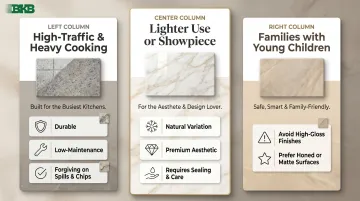
Match Material to Lifestyle
- High-traffic, heavy-cooking kitchens: Quartz or granite — durable, low maintenance, forgiving
- Lighter-use or showpiece kitchens: More room for marble or quartzite, which require more care but offer a level of natural variation no engineered material can replicate
- Families with young children: Avoid high-gloss surfaces that show every fingerprint; matte or honed finishes are more practical
8 Best Kitchen Cabinet & Countertop Combinations
These eight combinations are selected based on design versatility, material performance, current trends, and long-term resale value.
1. White Shaker Cabinets + White Quartz Countertops
The most enduringly popular kitchen combination — and for good reason. The tonal match creates a clean, airy look that suits farmhouse, contemporary, and transitional styles alike. White-on-white works when texture and finish variation carry the visual interest: matte cabinet doors against polished quartz, or a flat-panel shaker against a lightly veined engineered stone.
According to Statista's 2025 data, 46% of U.S. homeowners prefer white kitchen cabinets, and Shaker remains the dominant door style at 61% market share (Houzz 2025). This combination is the baseline for broad-appeal remodels.
At Broadway Kitchens & Baths, the Caesarstone line includes options like #5131 Calacatta, #5130 Cosmopolitan White, and #5111 Statuario Nuvo — all designed to work with white cabinetry while adding movement through subtle veining.
| Attribute | Detail |
|---|---|
| Best For | Small to medium kitchens, open-plan layouts, resale-focused remodels |
| Countertop Options | Pure white quartz, Calacatta-look engineered quartz with subtle veining |
| Key Consideration | Quartz is nonporous and requires no sealing; matte finishes are more forgiving than high-gloss in busy kitchens |
2. White Cabinets + Calacatta Marble Countertops
The classic luxury kitchen look. A white cabinet backdrop lets the marble's dramatic veining become the clear focal point — thick grey or gold veining adds warmth and movement that plain white stone cannot replicate.
Calacatta marble is rarer and bolder than Carrara: bright white background, dramatic veining, and a price point to match. Natural marble requires sealing every 6–12 months and etches from acidic substances like lemon juice, vinegar, and wine — a chemical reaction that leaves dull spots even through sealant.
For the same aesthetic with less upkeep, marble-look engineered quartz is a practical alternative. Broadway Kitchens & Baths carries Caesarstone #5131 Calacatta and Corian Quartz Calacatta Natura, both designed to replicate the look without the maintenance demands.
| Attribute | Detail |
|---|---|
| Best For | High-end residential remodels, lower-traffic or showpiece kitchens |
| Countertop Options | Natural Calacatta marble slab; marble-look quartz as a lower-maintenance alternative |
| Key Consideration | Natural marble etches from acids and requires regular resealing — marble-look quartz delivers similar aesthetics with significantly less upkeep |
3. Gray Cabinets + White or Light Quartz Countertops
The go-to modern neutral combination. Medium to dark gray cabinets grounded by bright white or cream countertops produce a sophisticated, gender-neutral aesthetic that works equally well in contemporary and transitional kitchens.
The key detail here is undertone matching. Warm gray cabinets (those with beige or taupe undertones) pair better with cream or off-white countertops. Cool gray cabinets (those with blue or silver undertones) suit crisp white or silver-veined quartz. Getting this wrong is one of the most common missteps in gray kitchen design.
| Attribute | Detail |
|---|---|
| Best For | Contemporary, transitional, or urban kitchen styles; mid-range remodels |
| Countertop Options | Bright white quartz, light grey with veining, soft cream engineered stone |
| Key Consideration | Match the countertop undertone to the cabinet undertone — warm gray pairs with cream; cool gray pairs with crisp white |
4. Navy Blue Cabinets + Warm Stone or Butcher Block Countertops
A bold, high-impact combination that prevents navy from reading cold or heavy. Butcher block brings natural warmth; warm-toned stone (golden-veined quartzite or similar) adds depth while keeping the palette grounded.
One important clarification: Fantasy Brown — commonly listed as a granite — is actually a dolomitic marble. It's harder than standard marble but still susceptible to etching and scratching, and softer than true quartzite. Worth knowing before you specify it.
Butcher block requires oiling a few times per year with food-grade mineral oil and needs careful moisture management near the sink. Stone options offer similar warmth with better durability.
| Attribute | Detail |
|---|---|
| Best For | Larger kitchens with good natural light, bold or eclectic design styles |
| Countertop Options | Butcher block, warm-toned quartzite, dolomitic marble with golden veining |
| Key Consideration | Butcher block needs regular maintenance and is vulnerable to water damage near the sink; stone alternatives offer better long-term durability |
5. Dark Charcoal or Black Cabinets + Light Quartz or Quartzite Countertops
High-contrast drama. Near-black cabinets against bright white or heavily veined light quartzite create a striking kitchen that photographs exceptionally well and feels intentional rather than trendy. Architectural Digest recommends leaning toward muted charcoal and ivory over pure jet black and bright white — the softer pairing is easier to live with long-term.
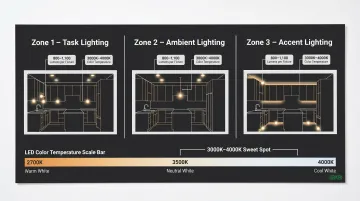
Lighting is non-negotiable with this combination. Dark cabinets absorb light aggressively, so plan for 800–1,100 lumens per fixture at 3000K–4000K color temperature, with multiple fixture points to avoid dim zones.
| Attribute | Detail |
|---|---|
| Best For | Modern, industrial, or luxury kitchen styles; larger kitchens with strong lighting |
| Countertop Options | White quartz, Super White quartzite, light grey veined stone slabs |
| Key Consideration | Adequate task and ambient lighting is not optional with dark cabinetry — light countertops help offset visual weight, but lighting plan must be designed alongside the cabinet selection |
6. Natural Wood or Walnut Cabinets + Black or Dark Stone Countertops
This pairing is moving faster than any other warm-toned combination in current design. The organic texture of walnut or rift-sawn white oak paired with dark granite or soapstone creates a grounded, nature-inspired kitchen with real depth.
The NKBA 2026 Kitchen Trends Report found 59% of industry respondents identify wood grain as growing in popularity, with white oak at 51% as the leading species. This combination is well-positioned in Japandi, modern organic, and Scandinavian-influenced design.
Soapstone is worth considering here: nonporous, naturally stain-resistant, and it develops a rich patina over time. It doesn't require sealing (unlike granite or marble) and minor scratches can be sanded out. The tradeoff is softness — it marks more easily than granite or quartz.
| Attribute | Detail |
|---|---|
| Best For | Modern organic, Japandi, or Scandinavian-inspired kitchens; open-plan spaces |
| Countertop Options | Black granite, absolute black granite, soapstone, dark quartzite |
| Key Consideration | Wood cabinets need a protective finish and moisture management near the sink; walnut and white oak are the two most popular species for this style |
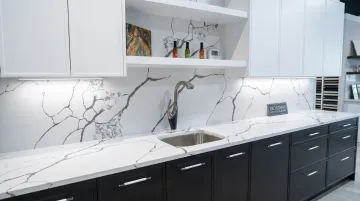
7. Two-Tone Cabinets (White Upper / Dark Lower) + Veined Quartz or Marble-Look Stone
One of the most versatile configurations in current kitchen design. White uppers with navy, charcoal, or forest green lowers — topped with a heavily veined quartz — creates visual depth without overwhelming the space. The Houzz 2025 study found 52% of homeowners add or upgrade an accent cabinet during renovation, confirming this is a well-established trend, not a passing moment.
The countertop does specific work in this configuration: it needs to bridge both cabinet tones. A veined white or cream quartz that pulls grey or warm neutrals from both the upper and lower cabinets ties the palette together. Broadway Kitchens & Baths carries several options well-suited to this task, including Caesarstone Statuario Maximus (#5031), Montblanc (#5043), and Corian Quartz Cashmere Carrara.
| Attribute | Detail |
|---|---|
| Best For | Medium to large kitchens, transitional style, homeowners who want bold design with balanced visual weight |
| Countertop Options | Veined white/grey quartz, Calacatta-look engineered stone, soft white marble-look porcelain slab |
| Key Consideration | The countertop must pull tones from both upper and lower cabinet finishes — this is what unifies the combination rather than making it feel like a collision |
8. Sage Green or Olive Cabinets + White or Cream Quartz Countertops
The fastest-rising non-neutral cabinet color in current kitchen design. The NKBA's 2026 Kitchen Trends Report shows 86% of respondents identify greens as popular — the highest ranking for any non-neutral color category. Sage or olive cabinets paired with warm white or cream countertops create a calming, organic palette that feels fresh without demanding attention.
This combination pairs especially well with brass or unlacquered bronze hardware. Overly saturated greens date quickly — the finishes with the most staying power are sage, muted olive, and dusty green tones. Zillow's 2025 data shows olive green kitchens can increase a home's sale price by approximately $1,600.
Broadway Kitchens & Baths carries several cream and warm white quartz options that complement green cabinetry well, including Caesarstone #4600 Organic White, #5130 Cosmopolitan White, and Corian Quartz Calacatta Natura and Neve.
| Attribute | Detail |
|---|---|
| Best For | Cottage, farmhouse, transitional, or nature-inspired styles; any kitchen size |
| Countertop Options | Warm white quartz, cream or off-white engineered stone, light butcher block for a casual feel |
| Key Consideration | Stick to muted, earthy green tones — sage, olive, dusty green |