Introduction
Storage space is hard to come by in New York and New Jersey homes. Manhattan studios average just 440 square feet, co-ops in pre-war buildings have closets built to 1930s standards, and even newer NJ townhouses often have shallow, oddly-shaped reach-ins that no standard shelving kit was designed for.
A well-designed custom closet does more than store clothes — it recovers usable square footage, cuts down on daily clutter, and adds real resale value.
According to research cited by SpaceManager Closets, buyers will pay up to 10% more for homes with custom closet upgrades, and 97% of realtors report that homeowners prioritize closet space over basement or attic storage.
The 12 ideas below cover reach-in closets, walk-in closets, and converted spaces across the tri-state area — sized and scoped for the homes people actually live in here.
Key Takeaways
- Custom closet design is especially valuable in NJ and NYC homes where space is tight and storage is limited
- The strongest designs combine vertical shelving, double hanging rods, and a mix of open and closed storage
- Built-in LED lighting, modular towers, and floor-to-ceiling shelving turn underused wall space into functional storage
- Closet type (reach-in vs. walk-in) and your wardrobe mix determine which ideas deliver the biggest impact
- A free design consultation with Broadway Kitchens & Baths can help tailor a plan before you commit
Why Space Maximization Matters in NJ & NYC Homes
The numbers tell the story fast. The average NYC one-bedroom is 593 square feet. Pre-war Manhattan buildings — which make up a large portion of the co-op and condo inventory — were built with closets sized for wardrobes from a different era. Many older NJ homes face the same problem: closets that are only 12–14 inches deep, far below the 24-inch minimum that experienced carpenters recommend for functional storage.
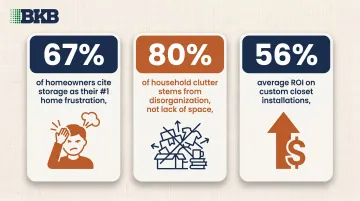
Square footage is only part of the problem. The real driver is disorganization — and the data backs that up:
- 67% of homeowners rank lack of storage as their number-one home-related frustration
- 80% of household clutter comes from disorganization, not a genuine shortage of space
- 56% average ROI on custom closet installations, making them one of the stronger home improvements in competitive markets like NJ and NYC
The right storage system solves most of the problem without adding a single square foot.
The 12 ideas below were chosen specifically for the closet types found across the tri-state area — from 24-inch reach-ins in Hoboken studios to sprawling walk-ins in Bergen County colonials.
12 Best Custom Closet Design Ideas to Maximize Space
These ideas range from structural changes to smart accessories. Most can be combined within a single closet design.
Smart Hanging Solutions
Idea 1 — Double Hanging Rods
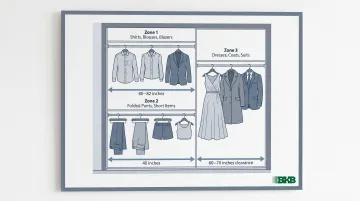
Replacing a single rod with a double-rod configuration is the single highest-ROI upgrade for short-garment storage. One rod sits at 80–82 inches from the floor; the lower rod drops to 40 inches. The section between them handles shirts, blouses, blazers, and folded pants — effectively doubling your hanging capacity in that zone.
One caveat: reserve one full-height section for long items. Dresses and coats need 60–70 inches of clearance and can't be double-stacked. Getting this split right before installation saves a lot of frustration later.
Idea 2 — Valet Rods and Pull-Out Hanging Bars
Retractable valet rods mount to a cabinet side panel and extend outward when needed. They're particularly practical in smaller NJ and NYC bedrooms where there's no chair or bench available for laying out tomorrow's outfit. When not in use, they tuck away and disappear into the cabinetry.
Pull-out hanging bars work similarly inside tower units — useful for steaming clothes or organizing items before packing.
Idea 3 — Dedicated Long-Hang Zones
Allocating one vertical section exclusively for full-length garments keeps dresses, coats, and suits from folding over and wrinkling. For NJ commuters maintaining formal work wardrobes, this isn't optional — it's a daily necessity. Plan for at least 24–30 inches of horizontal rod width in this zone and keep it separate from your double-rod sections.
Shelving and Storage Configurations
Idea 4 — Floor-to-Ceiling Shelving
Most standard closet systems stop at 7 feet. Pre-war Manhattan apartments often have 10–12 foot ceilings; even post-war buildings run 8–9.5 feet. That gap between the top shelf and the ceiling is wasted space in most homes.
Extending shelving to the ceiling captures it. Use the top shelves for:
- Seasonal items (winter coats, extra bedding)
- Luggage and oversized bags
- Infrequently accessed storage boxes
Keep everyday items at eye level (roughly 48–66 inches) and heavier items lower. A step stool or pull-down shelf mechanism handles access to the upper sections.
Idea 5 — Modular Shelf Towers with Adjustable Sections
Modular shelf towers let you reconfigure storage as your needs shift — useful for renters, homeowners in transition, or anyone whose wardrobe mix changes seasonally. A well-designed tower can include:
- Fixed shelves for structural stability
- Adjustable shelves that move on pegs
- A short-hang rod section
- Pull-out drawers at the base
The flexibility matters more than it might seem. A system that made sense when you worked from home may need rethinking when you return to an office and need more formal hang space.
Idea 6 — Corner Solutions with Angled or Carousel Units
Closet corners are commonly cited as one of the biggest sources of wasted space — and in smaller NJ and NYC closets, corners make up a meaningful portion of the total footprint. Running standard shelves straight into corners creates awkward dead zones where items get lost.
Better options include:
- Angled corner shelves that meet the wall at 45 degrees
- Lazy Susan-style carousel units (available in kidney, D-shape, and pie-cut configurations)
- Diagonal rod configurations that use the corner depth for hanging
Any of these converts dead space into accessible storage without expanding the closet footprint.
Built-In Features and Accessories
Idea 7 — Built-In Cabinetry and Integrated Drawers
Built-in cabinetry delivers the highest storage density of any closet system. Drawers, cabinets, and shelves are designed as a single floor-to-ceiling unit, with every inch accounted for and no gaps between components.
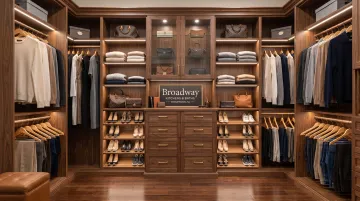
For NJ and NYC homes with non-standard dimensions — angled walls, low soffits, irregular depth — this is where fully custom solutions earn their cost. Broadway Kitchens & Baths offers both semi-custom closet systems and fully custom built-in cabinetry through brands including UltraCraft, Plain & Fancy, and Wolf Classic Cabinets. Their design team handles field measurements, design renderings, and installation, and every closet project starts with a free consultation. Their Englewood, NJ showroom at 257 South Dean St. lets you see and touch cabinet samples before committing.
Idea 8 — Pull-Out Accessories (Belt Racks, Tie Racks, Shoe Racks)
Vertical cavities as narrow as 6 inches — the space alongside a cabinet tower, for example — can hold pull-out or fold-down specialty accessories:
- Belt hooks that extend and retract
- Tie racks that slide out of a cabinet door
- Sliding shoe shelves with angled display
These accessories convert dead narrow spaces into organized, accessible storage. Most mount inside cabinetry towers and disappear when not in use — no visual clutter.
Idea 9 — Shoe Cubbies and Dedicated Shoe Walls
The average American woman owns around 27 pairs of shoes; men average around 12. Without a system, shoes take over closet floors fast and make the entire space feel chaotic.
Open cubby-style shoe storage — whether angled display shelves or stacked boxes — keeps shoes visible and accessible. Key dimensions to plan around:
- 13–14 inches deep per cubby to fit most adult shoe sizes
- 6–7 inches of vertical clearance for flats and sandals
- 10–15 inches for heels and boots
A dedicated shoe wall or tower on one side of a walk-in closet eliminates floor piles entirely.
Aesthetic and Lighting Upgrades
Idea 10 — Integrated LED Lighting (Under-Shelf and Accent)
Interior closets — common across NJ and NYC homes — have no windows and often rely on a single overhead fixture that casts deep shadows. LED strip lighting mounted under shelves or inside cabinetry solves this directly.
Architectural Digest's 2026 closet trend report highlights retail-inspired multilayer lighting as a leading residential design move. Better light makes colors easier to read, textures more visible, and the whole space feel considered rather than utilitarian.
Motion-activated LED strips run $7–$27 per unit at retail and require no electrical work — installation takes minutes and the difference is immediately visible. LED strips last up to 50,000 hours, compared to roughly 1,000 hours for incandescent bulbs.
Idea 11 — Mirrored Panels or Sliding Mirror Doors
Mirrored closet doors or a mirrored back wall serve two purposes simultaneously: they reflect light into the room (reducing that cave-like feeling common in interior closets), and they eliminate the need for a separate full-length mirror in a small bedroom.
In compact NJ and NYC bedrooms where floor space is at a premium, removing one piece of furniture by incorporating its function into the closet is a genuine space gain. Sliding mirror doors also don't require floor clearance the way swing-out doors do — a practical advantage in tight rooms.
Idea 12 — Painted Accent Walls, Wallpaper, and Upgraded Hardware
The interior of a closet doesn't have to be utilitarian. A bold back-wall paint color, peel-and-stick wallpaper, or high-quality drawer pulls can transform the feel of even a basic wire or laminate system.
Current material trends (per NKBA's 2025 year-in-review) favor warm wood finishes, light neutrals, and earthy tones like sage green and terracotta. These translate well to closet cabinetry and shelving finishes. Matching hardware across all pulls and knobs — even inexpensive ones — creates cohesion that makes the whole system feel intentional rather than assembled from separate parts.
How to Choose the Right Custom Closet Design for Your Space
Start with an honest audit of what you own. The ratio of hanging clothes to folded items, shoes, and accessories determines whether your design should prioritize rod space, drawers, or shelving. A closet designed around a wardrobe that doesn't match will fail within weeks regardless of how good it looks.
Once you know your storage needs, match the configuration to your closet type:
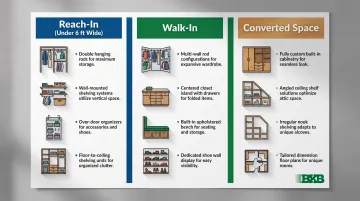
| Closet Type | Best Design Approaches |
|---|---|
| Reach-in (under 6 ft wide) | Double rods, wall-mounted systems, door organizers, floor-to-ceiling shelving |
| Walk-in | Multi-wall configurations, islands, seating, full shoe walls |
| Converted space (alcoves, under-stair) | Fully custom built-ins sized to exact dimensions |
Three mistakes worth avoiding:
- Ignoring vertical space — most systems stop at 7 feet; the space above is almost always usable
- Choosing all open storage — small items (accessories, jewelry, folded clothes) need drawers or boxes or they create visual clutter
- Buying a system before measuring — measure your exact closet dimensions including door swing, baseboard height, outlet locations, and any obstructions before selecting or ordering anything
Conclusion
The best custom closet for an NJ or NYC home isn't the most expensive one — it's the one designed around how you actually use the space. Prioritizing vertical space, choosing the right accessories for your habits, and being honest about your actual wardrobe mix will do more for your storage than any single product upgrade.
For built-in cabinetry or more complex configurations, a professional consultation before committing to a design is time well spent. Broadway Kitchens & Baths provides free design consultations for residential closet and cabinetry projects throughout Bergen County, Hudson County, Manhattan, Brooklyn, and the broader tri-state area. Stop by their Englewood, NJ showroom at 257 South Dean St., or call +1 201-567-9585 to talk through your project.
Frequently Asked Questions
How much does it cost to install a custom closet?
According to Angi's 2026 data, custom closet installation averages $2,133, with a typical range of $1,044–$3,221. Walk-in closets with full built-ins can reach $8,000 or more. In higher cost-of-living areas like NYC and NJ, expect labor and material costs to run at the upper end of published ranges.
How much does a modular closet system cost?
Modular systems (such as IKEA PAX or The Container Store's Elfa Classic) are assembled from pre-configured components and typically run $500–$2,000 for a standard reach-in or small walk-in. They're a practical starting point for renters or homeowners not ready to commit to built-ins, though they offer less flexibility for irregular closet shapes.
What is the average cost to design a closet?
Many companies, including Broadway Kitchens & Baths, offer free initial design consultations. If design complexity increases (detailed cabinetry drawings, material sourcing, multiple revisions), some firms charge $50–$200/hour for interior design time. For most residential projects, the free consultation is enough to get a usable plan and a quote.
What are the latest closet organizer trends?
Current trends favor integrated LED lighting, warm wood finishes (wood-faced cabinetry surpassed painted finishes in 2025 according to the National Kitchen & Bath Association), and the "everything closet" concept where the space doubles as a dressing room. Mixed open and closed storage (visible shelves for display, closed drawers for small items) is the most popular layout choice.
What are the best closet organization systems?
The three main system types are wall-mounted track systems (most adjustable, most affordable), floor-based modular units (furniture-like appearance, easier for renters), and fully custom built-ins (highest storage density, best ROI). The right choice depends on your closet dimensions, budget, and whether you own or rent.
Can AI design my closet?
Several companies offer free browser-based configurators — IKEA's PAX Planner, The Container Store's online design tool, and Modular Closets' 3D planner among them. These work well for standard rectangular layouts. For irregular closets, angled walls, or compact pre-war spaces common in NJ and NYC homes, on-site professional measurement remains necessary.