
Here's the honest answer upfront: a full bathroom renovation in the NJ/NYC area typically takes 6 weeks to 3+ months from initial planning through punch list. The active construction phase averages 3–6 weeks — but in NYC especially, the pre-construction phase can take longer than the build itself.
This guide breaks down exactly where the time goes, what's different about this market, and what you can do to protect your schedule.
TL;DR: Quick Timeline Summary
- Cosmetic refresh (fixtures, paint, hardware): 1–2 weeks of construction, 3–5 weeks total
- Mid-level remodel (new tile, vanity, minor layout changes): 3–4 weeks of construction, 6–10 weeks total
- Full gut renovation (plumbing reroute, electrical, all new finishes): 4–6+ weeks of construction, 3–4 months total
- NYC co-op/condo board approvals alone can add 4–8 weeks before construction begins
Bathroom Renovation Timeline: Phase-by-Phase Breakdown
Bathroom Renovation Timeline: Phase-by-Phase Breakdown
Pre-Construction Phase
This is where most NJ/NYC projects fall behind — not during construction, but before it starts.
Planning and Design Decisions (2–4 Weeks)
This phase covers finalizing your layout, selecting every material (tile, vanity, fixtures, hardware), and working with your contractor to lock in scope. Late decisions here are the leading cause of delays downstream. If you're still choosing tile when demolition starts, expect the project to stall.
Permits and Approvals (1–6+ Weeks)
Any work involving plumbing relocation, electrical changes, or structural modifications requires a permit. In NYC, an Alteration Type 2 (Alt-2) filing is typically required when relocating wet fixtures or removing walls. Simpler filings can move faster, but complex ones involve plan examination and take longer.
In New Jersey, permits are administered at the municipal level under the state's Uniform Construction Code. Jersey City's construction code office advises applicants to allow 20 business days for application review. Hoboken and Newark don't publish comparable benchmarks, so budget conservatively — two to four weeks minimum in larger cities, sometimes less in smaller suburban towns.
Material Sourcing and Lead Times (1–4+ Weeks)
This step trips up more projects than homeowners expect:
- Standard in-stock materials: approximately 2 weeks
- Special-order or imported tile: 3–6 weeks
- Custom vanities: 4–8 weeks
- Custom cabinetry, natural stone, specialty tile: up to 8–16 weeks
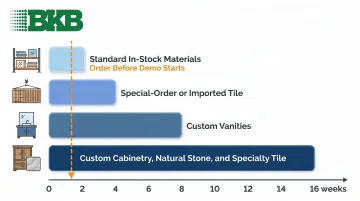
The critical rule: order everything before demolition begins. In NYC, a delayed vanity shipment doesn't just mean waiting — it means rescheduling a freight elevator slot and potentially losing days on the calendar.
Construction Phase
Once permits are in hand and materials are staged, construction moves in a predictable sequence — but each phase has its own built-in delays to account for.
Demolition and Rough-In (3–7 Days)
Demo and rough-in typically run 3–7 days combined. Stripping a standard bathroom takes about one day; rough-in plumbing and electrical follow over the next 2–3 days. The catch: inspections must occur before walls close, and inspector availability can add 1–3 days depending on your municipality and time of year.
Tile, Drywall, and Waterproofing (1–2 Weeks)
Tile work is almost always the longest part of the construction phase. Smaller mosaic tiles take significantly longer to set than large-format tiles, and mortar and grout cure times cannot be compressed — each step requires mandatory wait periods before the next begins. Waterproofing membrane application adds another day or two before any tile can be installed.
Fixture Installation, Finishes, and Punch List (3–5 Days)
The final stretch covers vanity installation, plumbing fixtures, electrical finishes, trim, and hardware. After that comes the final walkthrough and punch list. Plan for 1–5 days to close out remaining items — especially if any pieces are backordered or need a return visit.
NJ vs. NYC: How Your Location Shapes the Timeline
Co-op and Condo Board Approvals
If you live in a co-op or condo, your renovation timeline doesn't start when the contractor shows up — it starts when you submit your alteration agreement to the board.
This is a formal legal contract that governs scope of work, contractor insurance requirements, working hours, and building protection measures. The review process typically involves:
- Management review: 1–2 weeks
- Building architect or engineer review: 2–4 weeks
- Board vote: Timing depends on when the board meets — many meet monthly
According to Gallery KBNY, the full co-op board approval process can run 8–16 weeks. Neither you nor your contractor can speed that up. Factor it in from day one.
Most alteration agreements require:
- Contractor liability insurance of at least $1,000,000
- A refundable renovation deposit
- Building superintendent inspection of new plumbing before walls close
NYC DOB Permits, Working Hours, and Building Rules
Beyond board approvals, NYC projects face additional friction:
- DOB permit filings are required for any plumbing relocation, electrical work, or structural changes — not just cosmetic updates
- Working hours under NYC's Noise Code are 7:00 AM to 6:00 PM on weekdays; co-op buildings often impose stricter limits (typically 9:00 AM to 5:00 PM, no weekends)
- Freight elevator access is frequently restricted to specific mid-day windows, which directly limits when materials can be delivered and when debris can be removed
- Common area protection — laying Masonite in hallways during material transport — is required by most buildings and adds setup time each day
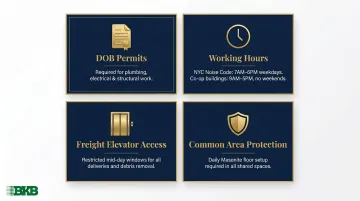
Taken together, these constraints compress your effective working hours and create scheduling complexity that suburban projects don't face.
Union vs. Non-Union Environments
Some NYC co-op and condo buildings require union labor for specific trades as a condition of their alteration agreement. This is a building-by-building policy, not a citywide rule — but it matters for scheduling and contractor selection.
Working with a contractor experienced in both environments eliminates a common source of delays. Broadway Kitchens & Baths operates in both union and non-union settings across the tri-state area, which means building-specific labor requirements don't become a scheduling bottleneck.
NJ Permit Variability
New Jersey's 564 municipalities each run their own construction code enforcement office under the state's Uniform Construction Code. There's no single processing window that applies everywhere.
What this means in practice:
- Jersey City: Published 20-business-day review window
- Hoboken and Newark: No published benchmark — budget conservatively
- Suburban towns: Can sometimes turn permits around in under a week for straightforward scopes
If you're in Hudson County or Essex County, assume longer and plan accordingly.
Key Factors That Can Extend (or Shorten) Your Timeline
Scope of Work
The single biggest driver. Keeping existing plumbing in place eliminates a permit category entirely and saves weeks on rough-in. Moving a toilet or shower — even a few feet — triggers DOB filings, inspection holds, and additional trade coordination.
| Scope | Timeline Impact |
|---|---|
| Cosmetic refresh (no plumbing moves) | Shortest — minimal permitting, no rough-in |
| Mid-level remodel (minor layout changes) | Moderate — permits required, 1–2 inspection holds |
| Full gut (plumbing reroute, layout change) | Longest — full permitting, multiple inspections, longest construction |
Discoveries Behind the Walls
Older buildings — pre-war NYC apartments, mid-century NJ homes — regularly reveal problems that nobody planned for:
- Water damage and subfloor rot
- Galvanized pipes requiring replacement
- Knob-and-tube wiring that can't be left in place
- Lead paint in pre-1978 homes, which triggers EPA RRP Rule compliance for any firm doing the work
- Asbestos in NYC buildings, which requires an ACP-5 clearance certificate before a DOB permit can even be filed — and if discovered reactively during construction, can cause 2–6 weeks of unexpected delay
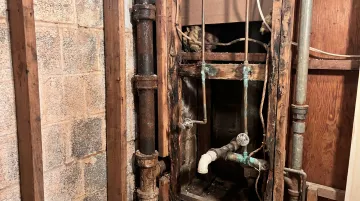
Budget 10–15% contingency time on top of your estimated schedule. Contractors experienced with pre-war and mid-century construction know how to scope these risks upfront — and handle them without stopping the job cold.
Contractor Coordination and Homeowner Decisions
Trade sequencing and homeowner decisions are two of the most controllable timeline variables — and the most commonly mismanaged. Common delay triggers include:
- Trade gaps during peak spring/summer season, when plumbers, electricians, and tile setters all have competing schedules
- Mid-project tile or fixture switches that force reordering and re-sequencing
- Added scope after demolition begins, which can cascade through every remaining trade
- Slow responses to contractor questions during active construction
Lock in every selection — tile, fixtures, finishes — before demolition starts. A two-day decision delay mid-project can cost a week of schedule.
Tips to Keep Your NJ or NYC Bathroom Renovation on Track
Order materials early. Confirm everything is on-site or has a firm delivery window before demolition starts. In NYC, a single missing item can push the next delivery to the next available elevator slot — potentially days out.
Start board approvals early. If you're in a co-op or condo, begin assembling your alteration agreement package — contractor credentials, insurance certificates, scope documentation — well before your target start date. For NYC co-op renovations, planning 5–6 months ahead is typical.
Choose a contractor who knows the local landscape. A contractor familiar with NYC DOB filings, NJ municipal permit offices, and building management requirements will cut through delays that catch out-of-market firms flat-footed. Broadway Kitchens & Baths, for example, works across both union and non-union buildings throughout the tri-state area — a distinction that matters when your condo board or super has specific labor requirements.
Build in a buffer. Add at least two weeks beyond the contractor's estimated completion date. Older buildings and first-time co-op or condo renovations are especially prone to unexpected delays from board approvals and DOB filings.
Frequently Asked Questions
How long does it take to do a bathroom renovation?
Cosmetic updates can wrap up in 1–2 weeks of active construction. A full renovation — from planning through punch list — typically takes 6 weeks to 3 months depending on scope, permits, and material lead times. The wider the scope, the longer the pre-construction phase relative to the build itself.
How long does it take to renovate a bathroom in NYC?
NYC construction typically runs 3–6 weeks, but co-op/condo board approvals and DOB permit processing add another 4–8 weeks on top. For a mid-level to full renovation, budget 3–4 months total — more for complex co-op buildings.
Can you renovate a bathroom in 2 weeks?
A purely cosmetic refresh — new fixtures, paint, mirror, lighting with no plumbing moves or tile work — can realistically finish in 1–2 weeks of construction. Anything involving permits, tile installation, or plumbing changes will take longer, and in NYC and NJ, permitting alone adds time before the first tool touches a wall.
Do you need a permit to renovate a bathroom in NJ or NYC?
Yes, for any work involving plumbing relocation, electrical changes, or structural modifications. Like-for-like fixture replacement and painting typically don't require permits. When in doubt, confirm with your local building department or contractor before starting — unpermitted work can create serious problems at resale.
What causes the biggest delays in NJ and NYC bathroom renovations?
The primary causes: co-op/condo board alteration agreement approvals, DOB permit processing, late material deliveries, and hidden conditions found during demolition. Early planning and an experienced local contractor reduce most of these risks, though not all can be avoided entirely.
How does living in a co-op or condo affect the bathroom renovation timeline?
Co-op and condo buildings require board approval through a formal alteration agreement before any work begins. The review process, which includes contractor credentials, insurance, scope documentation, and a board vote, typically takes 4–8 weeks. This must be factored into the timeline before a contractor is scheduled.