Introduction
NJ and NYC kitchens have changed. Where homeowners once settled for a wine rack tucked into a pantry corner, they're now carving out dedicated bar areas — purpose-built for both everyday use and weekend entertaining.
It makes sense. According to the 2026 Houzz Kitchen Trends Study, beverage stations rank as the second most requested built-in kitchen feature, with 24% of renovating homeowners adding one. That demand is especially relevant in the tri-state market, where kitchens range from compact NYC co-ops to spacious NJ suburban layouts — and where bar cabinet design has to work harder to fit the space.
This guide covers 10 kitchen bar cabinet ideas selected specifically for NJ and NYC homes, across different budgets, footprints, and styles. Each idea is paired with practical notes on what makes it work — and where it fits best.
Key Takeaways
- Beverage stations rank among the most requested kitchen built-ins, making bar cabinets a mainstream upgrade for most home renovations
- Options range from floating wall-mounts and pull-outs to full wet bars and island integrations
- Dry bars (no plumbing) are simpler and cheaper; wet bars add resale appeal but require more planning
- Space, existing cabinetry, and lifestyle should drive your decision alongside aesthetics
- Working with a local kitchen designer helps avoid costly missteps in non-standard NJ/NYC spaces
Why Kitchen Bar Cabinets Are Worth It in NJ & NYC Homes
A kitchen bar cabinet is a dedicated storage unit for beverages, glassware, and bar accessories — either built into existing cabinetry or installed as a standalone unit. Dry bars skip the plumbing entirely; wet bars include a sink and require water access.
In the NJ and NYC market specifically, demand for both has grown as homeowners look for targeted upgrades with strong resale returns.
The Case for Adding One
Minor kitchen upgrades recover 92.6% of their cost at resale in the Middle Atlantic region, according to the 2025 Cost vs. Value Report. Nationally, the figure climbs to 107.2% — meaning a bar cabinet addition often costs less than a full renovation while delivering comparable resale impact.
Beyond resale, the NAR/NARI 2025 Remodeling Impact Report assigns kitchen upgrades a Joy Score of 10 out of 10 — the highest rating possible — with 28% of homeowners citing improved functionality as the most important remodeling outcome.
NJ vs. NYC: Why Design Context Matters
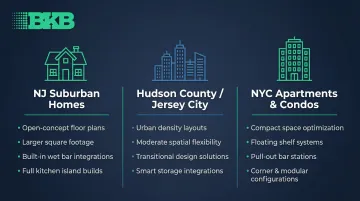
The tri-state market isn't uniform:
- NJ suburban homes often have more square footage and open-concept layouts — better candidates for built-in wet bars, island integrations, and larger freestanding units
- NYC apartments and condos demand space-saving solutions — floating shelves, pull-out stations, and corner configurations that don't eat into already-tight floor plans
- Hudson County and Jersey City fall somewhere in between — urban density with slightly more flexibility than Manhattan
The ideas below are organized with these constraints in mind — so whether you're working with a 400-square-foot Brooklyn apartment or a sprawling Bergen County kitchen, there's a configuration that fits.
10 Best Kitchen Bar Cabinet Ideas for NJ & NYC Homes
These 10 ideas reflect the range of NJ/NYC home styles — from urban lofts to classic suburban kitchens — across different budgets, footprints, and aesthetics.
1. Floating Bar Cabinet with Open Shelving
Wall-mounted base cabinet paired with open upper shelves for displaying bottles and glassware. No floor footprint — that's the entire point.
Best for: NYC apartments, NJ condos, minimalist or Scandinavian kitchens
The floating design creates visual breathing room, which is critical in compact spaces where every square foot is accounted for. NYC-based designers consistently recommend open shelving and wall-mounted solutions to keep small kitchens from feeling cramped while maintaining access to frequently used items.
Light-colored cabinetry or white walls behind the unit will amplify the open feel.
2. Built-In Bar Cabinet with Glass-Front Doors
Fully integrated into existing kitchen cabinetry, with glass-panel doors that put curated bottle collections on display. One of the cleaner high-end looks in residential renovation.
Best for: Traditional, transitional, and classic NJ suburban kitchens
Glass fronts do more than look good — they increase perceived luxury and signal design intent to future buyers. Getting this right means matching existing cabinet profiles and finishes precisely, which is where a kitchen designer earns their fee.
Broadway Kitchens & Baths offers fully custom cabinetry through brands like Plain & Fancy and UltraCraft — both of which can be spec'd to mirror existing kitchen cabinetry down to the door style and stain.
Custom built-ins run $500–$1,200 per linear foot installed, but the integration is cohesive in a way prefab units can't match.
3. Kitchen Island with Integrated Bar Cabinet
Bar storage built directly into one or both ends of a kitchen island — combining prep surface, seating, and beverage storage in a single unit.
Best for: Open-concept NJ homes with larger kitchens
Islands are nearly universal in modern renovations: 96% of renovators do some level of island work, with 42% adding a new island entirely (2026 Houzz). The beverage station ranks as the fourth most recommended island feature among design professionals — and wine fridges now come as narrow as 6 inches, making integration possible even in more modest island widths.
The social dynamic works, too. An island bar cabinet naturally becomes the gathering point during entertaining, which keeps traffic out of the main kitchen work zone.
4. Corner Bar Cabinet
Purpose-built cabinetry that converts an underused kitchen corner into a functional bar zone. Lazy Susan-style interiors or angled shelving keep everything accessible.
Best for: Galley-style NJ kitchens, NYC apartments with dead corner space
Corners are consistently the most wasted area in small kitchens. A well-designed corner bar cabinet reclaims that space without adding to the room's visual clutter — the cabinet face stays flush with surrounding cabinetry, and the interior works harder than it appears from outside.
This configuration pairs well with Wolf Classic Cabinets, which Broadway Kitchens & Baths carries in standard sizes that can be adapted for corner placement.
5. Industrial-Style Metal and Wood Bar Cabinet
Open steel framing, raw or brushed metal hardware, and reclaimed or dark wood shelving. The aesthetic is deliberately unfinished — exposed structure is the design.
Best for: Brooklyn lofts, Hoboken and Jersey City apartments, kitchens with exposed brick or concrete
Mixed-material designs that blend different finishes and textures are among the top design directions for 2025. The industrial bar cabinet fits naturally into urban interiors that already feature matte black fixtures, open ceilings, or concrete countertops.
Open shelving eliminates door and hinge hardware, which typically brings the cost down relative to built-in custom units. The raw material aesthetic is also forgiving of imperfect installs.
6. Minimalist White Shaker Bar Cabinet
Clean shaker-door cabinetry in white or off-white, simple bar pulls, blending the bar zone into surrounding kitchen cabinetry without announcing itself.
Best for: Nearly any kitchen; especially effective in smaller NJ homes or NYC kitchens where visual continuity matters
Shaker remains the most popular cabinet door style in the US — confirmed by multiple sources including MasterBrand and Houzz — and white leads cabinet color choices at 33% for upper cabinets. The combination is visually quiet, which is an asset when the goal is to add bar functionality without making it feel like a separate zone tacked on.
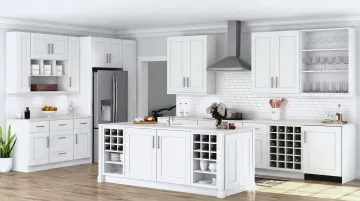
It's also the lowest-risk choice for resale: broad buyer appeal, and it doesn't date quickly.
7. Dark Wood Wet Bar Cabinet
Rich-toned cabinetry — walnut, espresso, or dark oak — with a built-in sink, drip tray, wine storage, and drawer inserts. A full wet bar setup.
Best for: Larger NJ homes with dedicated kitchen or dining areas
Wood tones lead lower cabinet choices at 28% (2024 Houzz), and dark wood with built-in bar functions reads as upscale in a way lighter finishes don't. Walnut and cherry work well for wet bar applications — the grain stays visible under matte finishes, and the warmth contrasts effectively with stone or quartz countertops.
A custom wet bar in this configuration runs $10,000–$30,000 installed, including plumbing. That's a significant investment, but among bar cabinet types, the wet bar with quality cabinetry tends to carry the strongest resale argument.
8. Two-Tone Bar Cabinet (Upper and Lower Contrast)
Lighter upper shelf or cabinet paired with a darker lower base — adds depth and character without overwhelming the kitchen's visual balance.
Best for: Transitional-style NJ kitchens blending traditional and contemporary elements
Transitional is the dominant kitchen style at 25% of renovating homeowners, and the two-tone approach fits it naturally. Blue leads lower cabinet color choices at 20% (2024 Houzz), making navy or slate blue bases a data-backed option for homeowners who want an accent without committing to a bold statement throughout the full kitchen.
The bar zone is an ideal place to introduce a contrasting color: it's contained and intentional, and straightforward to update later if tastes change.
9. Transitional Bar Cabinet with Butcher Block Top
Shaker or beadboard-front cabinetry with a warm butcher block countertop and open shelving. The farmhouse aesthetic, updated for modern kitchens.
Best for: Suburban NJ homes with transitional kitchen designs
Pure farmhouse style has declined to 7% market share (2025 Houzz), but butcher block's warmth hasn't followed it down — it's increasingly used as an accent surface in otherwise contemporary or transitional kitchens. A butcher block bar top paired with sage green or white cabinetry and matte black hardware reads more 2025 than 2015.
Plan this as a dry bar. Butcher block needs regular maintenance and doesn't hold up well around wet bar plumbing unless it's sealed correctly and kept up over time.
10. Space-Saving Pull-Out Bar Cabinet
A concealed bar station built into a standard cabinet opening — pulls out or folds open to reveal a full bar setup, completely hidden when not in use.
Best for: NYC apartments and compact NJ kitchens where dedicated bar space isn't feasible
Hidden storage is a top priority in 2025 kitchen design, and the pull-out bar cabinet is its most practical expression. During the day, it looks like any other cabinet. Open it, and there's a working bar station: bottle storage, glass holders, and a small cutting surface.
For urban kitchens where multifunctionality is non-negotiable, this configuration delivers. Broadway Kitchens & Baths' in-house carpentry crews handle the custom sizing and framing these installs require — particularly in older NJ homes and NYC buildings where cabinet openings rarely conform to standard dimensions.
What to Look for When Choosing a Kitchen Bar Cabinet
Space and Layout First
Before selecting a style, measure the available wall or floor space and note any structural constraints:
- Plumbing access determines whether a wet bar is practical
- Wall stud location affects where floating cabinets can anchor
- Ceiling height influences whether upper shelving is viable
- Doorway clearance matters for pull-out configurations
Older NJ homes and NYC co-op buildings frequently have non-standard dimensions, sloped walls, or load-bearing structures that affect installation. Professional measurement before ordering — custom or semi-custom — prevents costly surprises mid-installation.
Style and Material Considerations
Once layout constraints are mapped, these material and configuration choices shape the final result:
- Door style: Shaker, slab, glass-front, or beadboard — match to existing cabinetry or create intentional contrast
- Finish durability: Bar areas see high use; quality box construction, durable finishes, and soft-close hardware hold up better than standard kitchen-grade options
- Interior fittings: Wine racks, glass holders, pull-out trays, and bottle drawers all add cost but add real usability
- Semi-custom vs. fully custom: Semi-custom cabinets ($150–$650/LF installed) offer the best balance of flexibility and cost for most bar projects
Budget Ranges to Know
| Project Type | Installed Cost Range |
|---|---|
| Prefab dry bar | $1,000–$5,000 |
| Custom dry bar | $5,000–$15,000 |
| Prefab wet bar | $2,000–$12,000 |
| Custom wet bar | $10,000–$30,000 |
| Bar cabinets (per linear foot) | $150–$500 |
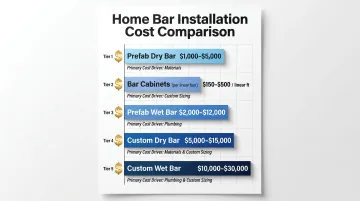
NJ/NYC labor costs run above national averages, so budget toward the upper end of these ranges. Broadway Kitchens & Baths offers free consultations at their Englewood, NJ and Manhattan, NY showrooms, where designers can give accurate estimates based on your specific space and materials.
Conclusion
There's no universal answer for the best kitchen bar cabinet. A NYC studio apartment needs a fundamentally different solution than an open-concept NJ colonial — and even within those categories, existing cabinetry, plumbing access, and personal use patterns shape what works.
The 10 ideas above cover a wide enough range that most homeowners will find two or three that fit their situation. The next step is getting real measurements and honest advice about what's buildable within budget.
That's exactly where Broadway Kitchens & Baths comes in. Serving homeowners, builders, and designers across Bergen County, Hudson County, Manhattan, Brooklyn, and the broader tri-state area, Broadway Kitchens & Baths handles everything from initial design consultation through final installation, including the custom sizing and plumbing coordination that bar cabinet projects often require. Reach the NJ showroom at (201) 567-9585 or visit 257 South Dean St., Englewood, NJ to schedule a consultation.
Frequently Asked Questions
What is a bar cabinet?
A bar cabinet is a dedicated storage unit for beverages, glassware, and bar accessories. Dry bars have no plumbing — only storage and counter space. Wet bars include a sink and require water and drain access, making them a more involved installation.
Are bar cabinets still in style?
Yes. Beverage stations rank as the second most popular built-in kitchen feature, with 24% of renovating homeowners adding one (2026 Houzz). Modern designs have left the dated mahogany home bar behind, with options suited to everything from minimalist apartments to transitional suburban kitchens.
How much does a bar cabinet typically cost?
Costs range from $1,000–$5,000 for a prefab dry bar up to $10,000–$30,000 for a fully custom wet bar with plumbing. Bar cabinet materials run $150–$500 per linear foot installed. Size, materials, and whether plumbing is involved are the biggest cost drivers.
Do bar cabinets increase home value?
Kitchen upgrades as a category earn a Joy Score of 10/10 (NAR/NARI 2025) and minor kitchen remodels recover 92.6% of cost in the Middle Atlantic region. Wet bar configurations with custom built-ins offer the strongest buyer appeal and resale value.
What is a kitchen counter bar called?
A raised counter area used for casual dining or bar seating is typically called a breakfast bar or kitchen bar. The cabinetry built into or beneath that counter is referred to as a bar cabinet, bar unit, or, when plumbing is included, a wet bar.
Are RTA cabinets actually cheaper?
RTA cabinets cost roughly $60–$200 per linear foot, compared to $500–$1,200 for custom. That's a real savings, but RTA units come in standard dimensions only, which creates problems in older NJ homes and NYC buildings where spaces rarely conform to standard sizes.