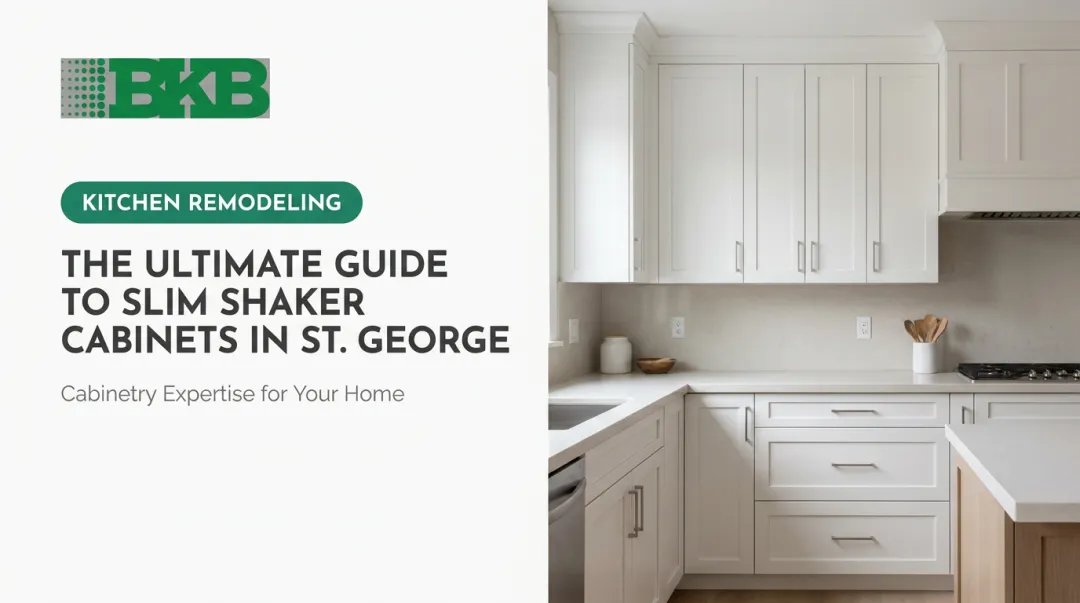

The difference comes down to frame width. That single dimensional change affects how a room feels, which hardware makes sense, and whether the cabinets complement your space's architectural character. Choose wrong, and even a well-executed renovation can feel slightly off.
This article breaks down the structural differences between classic Shaker and Slim Shaker cabinets, how each performs in different spaces, and a clear decision framework to help you choose confidently — whether you're renovating a single kitchen or speccing cabinets across a multi-unit building.
Key Takeaways
- Classic Shaker cabinets feature wider frames (2.5–3.5 inches), suiting traditional, farmhouse, and transitional spaces
- Slim Shaker frames measure 1–2 inches, creating a cleaner, more contemporary profile
- Compact or low-light kitchens benefit most from Slim Shaker, where reduced visual bulk keeps the space feeling open
- Classic Shaker holds broader resale appeal — 60% of renovating homeowners chose it in 2024, according to Houzz
- Both styles are similarly priced — let design fit drive the decision, not cost
Shaker vs Slim Shaker: Quick Comparison
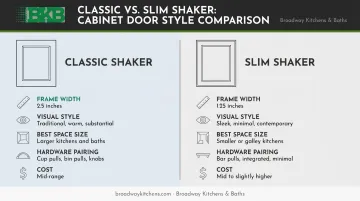
The two styles share the same foundational construction but diverge in frame width, visual weight, and the spaces they suit best. Here's how they stack up side by side:
| Feature | Classic Shaker | Slim Shaker |
|---|---|---|
| Frame width | 2.5–3.5 inches | 1–2 inches |
| Visual style | Traditional, warm, substantial | Modern, clean, minimalist |
| Best space size | Larger kitchens, well-lit rooms | Compact kitchens, low-light spaces |
| Hardware pairing | Knobs, cup pulls, traditional finishes | Bar pulls, brushed nickel, hidden hardware |
| Availability | Widely available, high production volume | Slightly narrower availability |
| Cost | Slightly lower due to economies of scale | Marginally higher in most markets |
What Are Shaker Cabinets?
The Shaker movement traces back to the late 1700s, when Mother Ann Lee arrived from England in 1774 and Shaker communities took root across New York and New England. Their furniture philosophy — grounded in honesty, simplicity, and fine craftsmanship — produced designs that were entirely functional, with no decorative excess.
That restraint is exactly why the style has endured. Classic Shaker cabinet doors use a five-piece construction: two vertical stiles, two horizontal rails, and one recessed flat center panel. The wider frame — typically 2.5 to 3.5 inches — gives the door visual weight and presence without ornamentation.
The Aesthetic Effect of Wider Frames
A wider frame does something specific to a room: it adds structure and warmth. In larger kitchens with high ceilings or period architectural details, that visual weight feels proportional and settled. Color choices respond well to this — deep navy, rich walnut, and warm white finishes all read particularly well on classic Shaker profiles because the wider frame carries the color with more presence.
Surface material selection follows the same logic: understated countertops that complement the cabinetry rather than compete with it. In practice, the most effective pairings with classic Shaker profiles include:
- Soapstone — matte, low-sheen, true to Shaker's utilitarian roots
- Absolute Black Granite — bold contrast without visual complexity
- Quartz (Caesarstone, Silestone, Corian) — neutral tones, durable, clean
- Butcher block — adds warmth and reinforces the handcrafted aesthetic
Where Classic Shaker Cabinets Work Best
Classic Shaker is the lower-risk choice for projects that need broad appeal. The market data backs this up: Shaker has been the most popular kitchen cabinet door style in the US for years, holding at 60% in the 2024 Houzz Kitchen Trends Study — and 53% of NKBA designers expected it to remain popular over the next three years.
Best applications include:
- Larger residential kitchens with traditional or transitional architecture
- Farmhouse and period-home renovations
- Multi-unit residential projects where broad buyer or tenant appeal is the priority
- Resale-focused renovations where conservative design reduces risk
What Are Slim Shaker Cabinets?
Slim Shaker is a direct evolution of the classic door — same five-panel construction, same recessed center panel, but with notably narrower stiles and rails. Depending on the manufacturer, the visible frame measures 1 to 2 inches. Barker Door's Slim Shaker product, for example, specifies a 1-inch visible stile and rail.
That narrower frame isn't just a cosmetic tweak. It changes the visual hierarchy of the door: less frame means more center panel, which opens up the surface, reduces visual bulk, and creates cleaner geometric lines. Those construction choices reinforce that visual shift.
Construction Differences Worth Knowing
Classic Shaker doors are typically built with solid wood frames, with maple, cherry, and oak being the most common species. Slim Shaker doors are more often constructed with engineered substrates: MDF cores with membrane-pressed or thermofoil finishes that produce seamless, joint-free surfaces suited to the style's clean aesthetic.
The narrower frame also has practical consequences for hardware. According to TaylorCraft Cabinet Door Company, knobs and pulls should not be installed on the narrow frame itself. Hardware needs to be placed on the recessed panel area instead.
This makes hardware planning more deliberate with Slim Shaker. The trend toward clean surfaces supports this approach anyway: 43% of designers in NKBA's 2024 Kitchen Trends Report agreed that homeowners prefer surfaces free of decorative hardware, using push-to-open technology instead.
Where Slim Shaker Cabinets Work Best
Slim Shaker sits between classic Shaker and modern flat-panel slab doors: you get the familiar recessed-panel reference with a considerably cleaner visual expression. Fabuwood describes the style as retaining Shaker appeal while adding a contemporary narrow frame and shallower panel depth.
Strong use cases:
- Compact kitchens where visual bulk works against the space
- Urban apartments and luxury condos with modern architectural detailing
- Open-concept spaces where cabinetry needs to recede rather than dominate
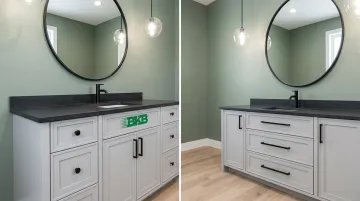
- Bathroom vanities where a streamlined look is the design goal
- Projects pairing with integrated appliances, quartz countertops, or large-format tile
Shaker vs Slim Shaker: Which One Is Right for Your Space?
Four factors should guide the decision.
1. Architectural Style of the Space
Classic Shaker fits naturally into traditional, farmhouse, and transitional interiors — spaces where some visual weight and warmth are assets. Slim Shaker fits contemporary, minimalist, and urban environments where clean lines are the point. If the architecture has period details (crown molding, panel wainscoting, traditional window casings), classic Shaker is the stronger match.
2. Room Size and Light Levels
In smaller or darker kitchens, the narrower Slim Shaker frame reduces visual clutter and lets more of the center panel reflect available light. Classic Shaker performs best where it can breathe: larger rooms, higher ceilings, and adequate natural light prevent the wider frame from feeling heavy.
3. Design Longevity and Resale Considerations
Classic Shaker carries lower trend risk. Its market dominance — consistent across Houzz data from 2020 through 2024 — reflects broad demographic appeal, which matters in resale-focused renovations.
Slim Shaker leans more contemporary, but its design roots remain in traditional Shaker construction. That foundation reduces the risk of it feeling dated compared to fully flat slab doors.
4. Hardware and Countertop Pairings Already in Plan
If the design brief includes integrated appliances, bar pulls, or handle-less hardware, Slim Shaker is the natural fit. If the plan includes decorative knobs, cup pulls, or traditional hardware in warm metal finishes, classic Shaker accommodates those more comfortably given its wider frame surface.
Clear Situational Guidance
| Scenario | Recommended Style |
|---|---|
| Farmhouse or period-home kitchen | Classic Shaker |
| Large kitchen with high ceilings | Classic Shaker |
| Multi-unit project targeting broad appeal | Classic Shaker |
| Compact urban kitchen | Slim Shaker |
| Contemporary open-concept space | Slim Shaker |
| Bathroom vanity with minimalist design | Slim Shaker |
| Project with handle-less hardware planned | Slim Shaker |
Getting the cabinet spec right early prevents costly changes downstream. Broadway Kitchens & Baths works with both Shaker and Slim Shaker cabinetry across residential and multi-unit projects in the tri-state area, helping architects, builders, and management companies get the specification right from the start rather than revisit it mid-project.
Conclusion
Neither style is universally better. Classic Shaker brings timeless warmth and broad market appeal — it's the lower-risk pick for resale-focused projects, larger spaces, and traditional or transitional interiors. Slim Shaker delivers contemporary precision and performs well in compact or modern environments where clean lines and visual clarity are the priority.
The right choice matches the cabinet profile to the space's size, architectural character, and intended aesthetic. Getting that match right from the start reduces redesign costs and produces a more cohesive result — regardless of whether the project is owner-occupied, a rental unit, or a spec build.
If you're working through a renovation and want expert guidance on which style fits your project, reach out to Broadway Kitchens & Baths. With showrooms in Englewood, NJ, and Manhattan, their team works with contractors, architects, and property managers on residential and multi-unit projects across the NYC metro area.
Frequently Asked Questions
What is the difference between Shaker and Slim Shaker cabinets?
The primary difference is frame width. Classic Shaker uses wider stiles and rails — typically 2.5 to 3.5 inches — for a traditional, substantial look. Slim Shaker narrows that frame to 1 to 2 inches for a cleaner, more contemporary profile. Both styles use the same five-panel, recessed-center-panel construction.
Are Slim Shaker cabinets more expensive than regular Shaker cabinets?
The price difference is typically minimal. Classic Shaker's higher production volume creates economies of scale that can make it slightly less expensive, but the gap is rarely significant enough to drive a decision. Material choice, finish, and custom versus semi-custom sourcing affect price more than door style alone.
Which cabinet style works best for small kitchens?
Slim Shaker is generally the stronger choice for compact spaces. The narrower frame reduces visual bulk, allows more of the center panel to show, and helps the kitchen feel more open. Classic Shaker's wider profile can feel heavy in tight rooms with limited natural light.
Can Shaker and Slim Shaker cabinets be used in the same kitchen?
Mixing the two is possible and can create an interesting transitional look, but it requires at least one consistent design element — such as color or hardware finish — to keep the space cohesive. Consult a designer before mixing styles to ensure the result feels intentional rather than inconsistent.
What hardware works best with Slim Shaker cabinets?
Slim Shaker pairs best with minimalist hardware: sleek bar pulls, brushed nickel or chrome handles, and hidden hinges or soft-close mechanisms. The narrow frame limits placement on the stile or rail, so hardware is typically installed on the recessed panel, making low-profile options the practical choice.
Do Shaker cabinets add resale value to a home?
Classic Shaker is the safer choice for resale appeal, accounting for 60% of cabinet upgrades in 2024 across buyer demographics. Kitchen renovations broadly deliver strong returns: the 2025 Cost vs. Value Report by JLC puts a midrange minor kitchen remodel at 113% cost recouped at resale.