Introduction
Cabinets cover more visual square footage than anything else in a kitchen. When they look worn or dated, the whole room does too. But tearing everything out and starting fresh is rarely the only path forward.
A full gut renovation is rarely necessary. According to the 2025 Cost vs. Value Report, a minor kitchen remodel recoups 107.2% of its cost at resale — outperforming every other kitchen renovation tier. Targeted updates consistently beat full demolitions for return on investment.
This guide covers 11 specific ideas, organized from weekend DIY projects to full professional replacements. Whether you're working with a tight budget or planning a complete overhaul, there's an approach here that fits your cabinets' condition and your goals for 2026.
Key Takeaways
- Cabinet updates range from a $50 hardware swap to a $30,000+ full replacement; condition and budget should determine which route makes sense
- Paint, new hardware, and under-cabinet lighting are the fastest weekend wins with the lowest cost
- Trim, glass inserts, and door replacements deliver stronger visual impact while keeping existing cabinet boxes
- Two-tone finishes and limewash are 2026's standout trends for a high-end, custom look
- When boxes are structurally compromised or a layout change is needed, full custom replacement is the right call
Quick & Affordable Cabinet Updates (Ideas 1–4)
These four updates cost the least and require the least commitment. Most can be completed over a weekend with basic tools. Combined cost for all four typically falls between $250 and $1,500 depending on kitchen size and material choices.
Idea 1: Paint or Refinish Cabinet Exteriors
Repainting is the most impactful budget update available — and the most frequently botched. Skipping prep steps is why painted cabinets peel within a year.
The correct process:
- Degrease all surfaces thoroughly (TSP or a degreasing cleaner)
- Sand lightly with 120-grit to create adhesion
- Apply a bonding primer — skip this and paint won't hold
- Topcoat with cabinet-grade enamel (not wall paint)
DIY material costs run $200–$600 for a full kitchen. Professional painting averages $940 for small kitchens, scaling to $5,000+ for larger ones, per Angi's 2026 cabinet painting data.
2026's trending colors: Warm whites, greige, sage green, smoky jade, and deep espresso brown. The NKBA confirmed that "color is definitely back" in kitchens, with greens, blues, and browns leading. MasterBrand's annual report found that for the first time in nine years, white is no longer the top cabinet finish — light wood stains have taken the lead.
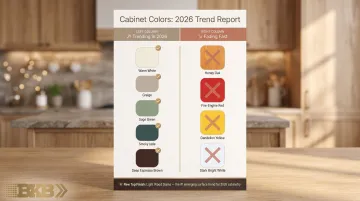
Colors to avoid: Honey oak stain, fire-engine red, dandelion yellow, and stark bright white are all fading fast.
Idea 2: Swap Out Hardware (Knobs, Pulls, and Hinges)
New hardware is the most reversible update on this list — and at $2–$50 per piece (full kitchen average around $300), it's also the lowest-cost option with immediate visual payoff.
Before ordering, measure the existing hole spacing on your pulls. Standard spacing is 3" or 3.75" center-to-center, which means you can swap hardware without re-drilling.
What's trending in 2026:
- Unlacquered brass and aged bronze (warm, living finishes)
- Matte black for crisp contrast on light cabinets
- Gunmetal and satin nickel as versatile middle-ground options
- Mixing complementary finishes (brushed brass + matte black) is a current design trend
Polished chrome has largely given way to warmer metallics across 2026 trend reports.
Idea 3: Paint or Wallpaper Cabinet Interiors
Interior cabinet surfaces are easy to overlook — but in glass-front or open-shelf cabinets, an unfinished interior reads as an afterthought. A contrasting paint color or peel-and-stick wallpaper pattern turns it into a deliberate design feature.
- Peel-and-stick wallpaper: Reversible, no priming needed, works on smooth laminate surfaces
- Paint: More durable; sand lightly, prime, paint, then seal with a water-based topcoat
- Remove shelves before starting — painting around them produces sloppy results
This works best in glass-front cabinets, open shelving zones, or any cabinet used for display rather than heavy daily use.
Idea 4: Add Under-Cabinet and Interior Lighting
Under-cabinet LED strips do two things at once: they illuminate countertops for actual task work and make the space feel larger by drawing the eye away from dated surfaces above.
Options by budget:
- Plug-in LED strips: from $50
- Mid-range hardwired systems: $20–$100 per linear foot
- Full custom hardwired installation: up to $1,500+
Battery-powered puck lights work well inside glass-front cabinets without any wiring. For a more polished finish, hardwired systems are worth the added cost. It's also one of the few low-cost updates that carries measurable weight with buyers during resale.
Style & Design Upgrades (Ideas 5–8)
These updates require more planning — and in some cases a contractor — but deliver a noticeably stronger result than paint and hardware alone. Budget roughly $500–$10,000 depending on scope.
Idea 5: Add Trim, Molding, or Decorative Panels
Flat-front cabinet doors look cheap even when they're well-made. Adding slim Shaker-style panels or perimeter molding transforms them into something that reads as custom millwork.
The process:
- Cut trim to size (miter corners at 45°)
- Glue and nail to door face
- Fill nail holes and seams with wood filler
- Sand smooth, prime, and paint to match
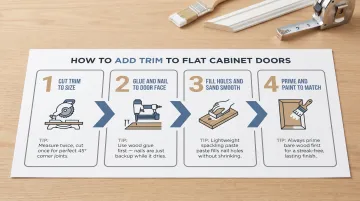
One critical caution: proportion matters. Heavy molding on small cabinet doors looks clunky and dated in its own way. Keep profiles slim and consistent with the kitchen's existing architectural style.
Idea 6: Replace Cabinet Doors (Cabinet Refacing)
Cabinet refacing replaces doors, drawer fronts, and visible hardware while the existing cabinet boxes stay in place. It typically costs 30–50% less than full replacement, with HomeAdvisor placing the national average at $7,230 and a range of $4,234–$10,226, or $150–$450 per linear foot.
Refacing makes sense when:
- Cabinet boxes are structurally sound and square
- The existing layout works for your lifestyle
- You want a new look without demolition
Refacing is the wrong choice when:
- Boxes are warped, water-damaged, or soft
- You need to change the kitchen's layout
- Hinge or box hardware is failing
Material choice affects price significantly: laminate runs $150–$250 per linear foot, while solid wood doors push to $300–$450+.
Idea 7: Install Glass Door Inserts
Replacing solid door panels with glass opens up the kitchen visually and creates the impression of custom cabinetry — especially when the interior is styled intentionally.
Glass types and approximate costs:
- Clear glass doors: $75–$150 per door
- Textured/seeded marine glass: $82–$110 per panel
- Leaded glass (premium): $200–$400 per door
- Retrofitting existing doors (replacing panels only): 50–70% less than new doors
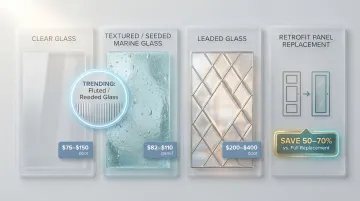
2026's glass trend: Fluted and reeded glass is gaining traction for its texture and soft light-diffusing effect — designers are specifying it in both modern and transitional kitchens. It provides privacy while still breaking up solid door faces, making it a practical choice when cabinets aren't perfectly organized behind them.
Idea 8: Convert Some Upper Cabinets to Open Shelving
Where Ideas 5–7 add to cabinet doors, this one removes them entirely. Taking doors off one or two upper sections costs almost nothing and creates an open-shelf effect without installing floating shelves.
Works best in defined zones:
- A dedicated coffee or tea station
- A dishware display with consistent pieces
- A styled corner that anchors the room visually
Open shelving does require more upkeep — grease, dust, and daily kitchen activity accumulate fast. This approach suits households that keep countertops clear and display items consistently. If that's not your style, the other three ideas in this section will serve you better.
High-Impact Cabinet Transformations (Ideas 9–11)
These are the most transformative options on the list — and the most expensive. They're best suited when quick fixes won't address the real problem, or when a long-term investment in the kitchen is the goal.
Idea 9: Try Two-Tone or Color-Drenched Cabinets
Two-tone cabinetry — typically lighter uppers paired with darker lowers — creates visual depth that single-color kitchens can't replicate. Deep green or navy lowers against warm white uppers is a classic 2026 pairing. Architectural Digest and Elle Decor both highlighted this as a standout kitchen trend for the year.
Color-drenching takes a different approach: painting cabinets, walls, and surrounding trim in the same hue for a bold, enveloping effect. When executed well, it reads as intentional and sophisticated rather than overwhelming.
Both approaches require clean execution at the transition line between colors. Tape carefully, use a steady hand, and seriously consider consulting a designer for color selection — the wrong pairing undermines the whole effect.
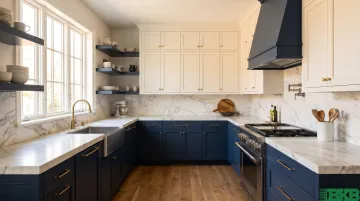
Specialty finishes (two-tone, glazing) add $500–$2,000 to professional painting costs.
Idea 10: Apply Wood Veneer or a Limewash Finish
Wood veneer applied to flat cabinet door panels gives laminate or outdated stained cabinets a natural, warm-wood appearance. Peel-and-stick veneer sheets are widely available and can cover a full kitchen for under $500 in materials — versus $2,000–$4,000+ for new replacement doors. Precision matters: veneer requires careful cutting and firm adhesion, especially around edges and corners.
Limewash paint is more forgiving. Applied with a brush in overlapping strokes, it creates a textured, slightly aged finish that reads as organic and artisanal. KBYD confirmed limewash as a resurgent trend for 2026 kitchens specifically. It's one of the few high-end-looking finishes that's genuinely DIY-friendly.
Both finishes need sealing in kitchen environments. Use a water-based matte topcoat to protect against grease and moisture without killing the finish texture.
Idea 11: Full Cabinet Replacement with Custom Cabinetry
When veneer and paint no longer cut it, full replacement is the right call — particularly when cabinet boxes are structurally compromised, the layout no longer works for how you use the kitchen, or you want complete control over configuration and materials.
Nationally, full cabinet installation averages $6,198, with a typical range of $1,934–$10,769 and custom or large kitchens exceeding $30,000.
For projects of this scope, working with a specialist matters. Broadway Kitchens & Baths carries five premium cabinet lines — including UltraCraft, Plain & Fancy, and Wolf Classic Cabinets — across hundreds of door styles, finishes, and configurations.
Their team manages the full process: field measurements, design renderings, installation, and final walkthrough. Homeowners who want a free design consultation before committing can visit the Englewood, NJ showroom or call +1 201-567-9585.
How to Choose the Right Cabinet Update for Your Kitchen
Three factors should drive your decision, and the order matters:
1. Current cabinet condition
- Sound, square boxes: all 11 options are available
- Minor surface damage: paint, veneer, or limewash can cover it
- Warped, water-damaged, or structurally soft boxes: replacement only
2. Budget
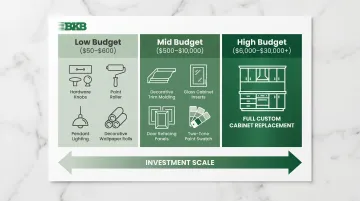
| Tier | Options | Typical Cost |
|---|---|---|
| Low | Hardware, paint, lighting, interior wallpaper | $50–$600 |
| Mid | Trim, glass inserts, refacing, two-tone paint | $500–$10,000 |
| High | Full custom replacement | $6,000–$30,000+ |
3. Desired outcome
- Selling soon: prioritize high-ROI updates (paint, hardware, lighting)
- Staying long-term: invest in higher-impact transformations
- Full style overhaul: refacing or replacement
Quick self-assessment:
- Open every cabinet and check boxes for squareness — push on corners to test for softness or flex
- Assess whether the layout still works for daily cooking habits
- Decide if the goal is cosmetic refresh or functional improvement
Once you've completed that checklist, let condition guide your budget — not the other way around. Applying limewash to a warped box or refacing water-damaged frames wastes money regardless of how appealing the result looks on paper.
Conclusion
Updating outdated kitchen cabinets doesn't require tearing everything out. The right idea from this list can transform a tired kitchen at any budget — from a $50 hardware swap to a full custom replacement. Warm wood tones, earthy greens, textured glass, and two-tone combinations are all defining cabinet design in 2026.
If you're ready to take the next step, Broadway Kitchens & Baths can guide you from concept to installation. Call +1 201-567-9585 to explore customizable cabinet solutions for residential, multi-unit, or commercial projects across the tri-state area.
Frequently Asked Questions
Frequently Asked Questions
What is the average cost to remodel kitchen cabinets?
DIY paint and hardware updates run $100–$600. Professional refacing averages $7,230 (range: $4,234–$10,226), while full replacement averages $6,198 (range: $1,934–$10,769). Refacing typically costs 30–50% less than replacement and delivers a comparable visual result.
What is the least expensive way to redo kitchen cabinets?
Repainting existing cabinet exteriors is the most budget-friendly approach — DIY materials run $200–$600 for a full kitchen. Hardware swaps come in second at roughly $300 for a full kitchen. Both can be completed without professional help for a fraction of refacing or replacement costs.
What is the 1/3 rule for cabinets?
In kitchen design, the 1/3 rule refers to hardware proportioning: a cabinet pull should measure approximately one-third the width of a drawer or one-third the height of a door for visually balanced results. It's a practical starting point for sizing pulls correctly before ordering.
What cabinet color is outdated?
Honey oak stain, fire-engine red, dandelion yellow, and stark bright white are the most dated finishes heading into 2026. Designers report clients actively moving away from cold bright whites toward warmer creams, taupes, and deeper wood tones.
What color kitchens are in for 2026?
Warm whites, sage and eucalyptus greens, warm taupes, and natural wood tones lead the 2026 palette. The NKBA named greens, blues, and browns as the year's top kitchen colors, marking a sustained shift away from the cool, stark neutrals that defined the previous decade.