Introduction
Kitchen cabinet painting remains one of the most cost-effective cosmetic upgrades a homeowner can make — but 2026 pricing looks different from what many budgeting guides still quote. Labor shortages in the trades have pushed professional wages up roughly 5% annually since 2020, according to Harvard's Joint Center for Housing Studies, and material costs have climbed alongside those pressures.
With the 2025 Houzz Kitchen Trends Study reporting median major kitchen remodel spending at $60,000, cabinet painting now delivers a visible refresh for roughly 5–15% of that cost — making it one of the few renovation options that keeps pace with inflation without draining a full remodel budget.
That context shapes everything that follows. This guide covers real 2026 pricing ranges, the factors that move costs up or down, a component-by-component breakdown, and a practical framework for building your estimate — whether you plan to DIY or hire a professional.
Key Takeaways
- Professional cabinet painting in 2026 typically runs $425–$3,353, with averages between $941 and $2,164 depending on project scope
- The biggest cost drivers are cabinet count, surface condition, door style, and application method
- Labor accounts for approximately 85% of total professional project cost, making paint selection a secondary budget factor
- Painting costs a fraction of new cabinet installation, which ranges from $1,935 to $10,767+
- DIY saves money upfront but risks poor finish quality and durability without the right prep and materials
How Much Does It Cost to Paint Kitchen Cabinets in 2026?
Cabinet painting doesn't have a fixed price. Costs shift based on kitchen size, number of doors and drawers, cabinet condition, finish type, and whether you hire a professional or tackle it yourself. That variability is why homeowners often underbudget — or get quotes that seem wildly different from each other.
2026 Pricing Tiers
| Tier | Cost Range | Best For |
|---|---|---|
| DIY / Entry-Level | $100–$600 (materials only) | Small kitchens, flat/slab doors, experienced DIYers |
| Mid-Range Professional | $425–$2,164 (avg. $941–$2,164) | Average kitchens, 13–20 doors/drawers, standard finishes |
| High-End / Specialty | $4,000–$6,053 | Large kitchens, spray application, 2K coatings, two-tone finishes |
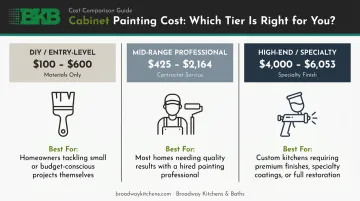
The wide spread between platforms reflects real scope differences. HomeAdvisor reports an average of $941 with a typical range of $425–$1,466. Thumbtack reports a higher average of $2,164 with a range of $1,390–$3,353. That gap exists because marketplace projects typically include more prep, primer, and finish coats in the quoted scope.
How Professionals Price the Work
Contractors use several different pricing structures, so knowing which one applies helps you compare quotes on equal footing:
- Per linear foot: $30–$60/linear ft. (most common structure; verified by both Angi and HomeAdvisor)
- Per door: $100–$250 per door (painters often price drawers separately)
- Per square foot: $3–$10/sq. ft. including labor and materials
- Flat project rate: Bundles labor, basic prep, primer, and paint — exclusions vary by contractor
A kitchen with 20 doors and 15 drawer fronts represents 35 billable pieces under per-piece pricing, per Architectural Digest. Always ask what the base rate covers before comparing quotes.
What's Typically Included vs. Excluded
Usually included:
- Labor and surface prep
- Primer and two finish coats
- Cleanup and reassembly
Usually excluded:
- Hardware replacement
- Interior cabinet box painting
- Cabinet repairs
- Specialty finishes (glazing, two-tone, 2K coatings)
- Island or crown molding painting
Key Factors That Affect Cabinet Painting Cost
Pricing depends on a combination of physical, material, and labor variables. Each one can shift your total significantly — sometimes by thousands of dollars.
Number of Cabinet Doors and Drawers
Most professionals price per piece, so cabinet count drives cost directly. A small 60 sq. ft. kitchen typically runs $180–$600 professionally. A large 400 sq. ft. kitchen can reach $4,000 for the same scope of work — the labor, drying time, labeling, and logistics scale with every additional piece.
Count every door and drawer front before requesting quotes. A kitchen with 10–12 pieces is a fundamentally different project than one with 25–30.
Cabinet Condition and Prep Requirements
Cabinets with heavy grease buildup, peeling paint, dents, or stains demand extensive prep — degreasing, sanding, patching, and specialized primers. Cabinet repairs alone add $140–$500 to a project before painting begins. On heavily worn cabinets, prep work is the primary labor cost, not painting itself.
Professionals who skip adequate prep produce jobs that peel within months. The culprit is always surface preparation, not paint quality.
Cabinet Material and Door Style
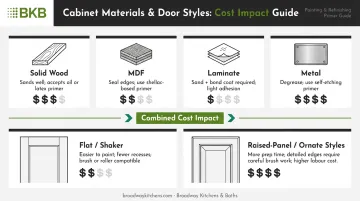
Material affects both adhesion requirements and paint selection:
- Solid wood: Accepts standard oil-based or waterborne alkyd primer/paint well
- MDF: Requires additional primer coats to seal the porous surface
- Laminate: Needs a bonding primer; adhesion is less predictable
- Metal: Requires enamel formulated for non-porous surfaces
Door style affects labor time. Flat slab and shaker doors coat quickly and evenly. Raised-panel and ornate doors have more surface area, require more careful brush control, and take longer per piece — which translates directly to higher labor costs.
Application Method: Brush/Roller vs. Spray
Spray application produces a smoother, factory-like finish without brush marks. Professionals typically remove doors and drawer fronts to spray them flat in a controlled environment, then paint cabinet boxes in place — a workflow that yields more consistent results.
Brush-and-roller work requires less equipment but often leaves visible texture in the finish.
This is especially true with water-based paints in warm conditions, where ridges and brush marks set quickly. No reliable industry source has pinned down a fixed dollar premium for spray over brush work, so factor it in as a finish-quality decision rather than a standard line item.
Location and Labor Rates
Geography matters. Angi's NYC-specific data shows a $1,069 average and a $527–$1,657 range — measurably above the national $941 average. For homeowners in New Jersey and Connecticut, expect rates to track closer to the metro premium than to national averages, though local quotes are the only reliable guide.
Full Cost Breakdown: What's Really Included in the Price
The total project cost has several distinct components. Understanding each prevents budget surprises.
Materials (paint, primer, sandpaper, tape, drop cloths)
Professional-grade cabinet paints — waterborne alkyds like Benjamin Moore Advance or Sherwin-Williams Emerald Urethane Trim Enamel, or 2K polyurethane topcoats — cost more per gallon than standard wall paints. They deliver notably harder, more chip-resistant finishes that hold up to daily kitchen use. Standard paint runs $20–$50/gallon; designer or specialty products reach $50–$100/gallon. Full DIY supply costs typically fall in the $200–$600 range for an average kitchen.
Labor and prep work
Labor represents approximately 85% of the total professional project cost, per HomeAdvisor. This covers degreasing, sanding, minor repairs, masking, priming, two finish coats, and reassembly.
Hardware and accessories
Many homeowners replace pulls, knobs, or hinges during a repaint — and the timing makes sense. Hardware installation averages around $300, with standard hardware pieces running $2–$50 each and professional installation adding $5–$30 per piece. New hardware can refresh the entire look without adding meaningful labor cost to the overall project.
Touch-ups and ongoing maintenance
A quality paint job needs occasional touch-up for chips or scratches — a minor ongoing cost covered by keeping a small amount of the original paint on hand. A professional-grade job typically lasts 8–15 years with proper prep and finish quality before a full repaint is needed.
DIY vs. Professional Cabinet Painting: A Side-by-Side Comparison
Both routes can work. The gap in outcome is real, though.
Cost and Time Reality
| Factor | DIY | Professional |
|---|---|---|
| Material cost | $100–$600 | Included in project price |
| Total project cost | $100–$600 | $425–$3,353+ |
| Time investment | A weekend or two | 3–5 days (professional timeline) |
| Cure time | Up to 3 weeks for latex | Varies by coating type |
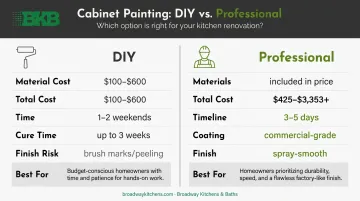
The DIY cost advantage is real. So is the time commitment — and latex paint's vulnerability to damage during its three-week cure period means you're living carefully around freshly painted cabinets for a while.
Quality and Durability
Professionals use commercial-grade coatings, spray equipment, and controlled application conditions — producing a harder film that holds up better and needs fewer touch-ups over time.
DIY results vary more. Common pitfalls include:
- Brush marks in water-based paint
- Uneven coverage on raised panels
- Premature peeling from inadequate degreasing or priming
When Each Option Makes Sense
DIY is reasonable when:
- The kitchen is small with flat or shaker-style doors
- You have painting experience and access to proper tools
- The change is purely cosmetic and resale value isn't a factor
Hire a professional when:
- The kitchen has 20+ doors/drawers or ornate door profiles
- Surfaces are laminate, MDF, or in rough condition
- Resale value matters and finish quality is expected to show
The cheapest quote isn't always the right choice. Poor prep, wrong primers, and thin coats lead to early peeling and a costly redo. Get two or three quotes and ask each contractor specifically what prep steps they include and what products they use.
When to Paint vs. When to Consider Replacement
Painting is the right call when cabinet boxes are structurally sound, doors hang properly, and the issue is simply color or outdated finish. At a national average of $941 (HomeAdvisor) versus roughly $5,000 for new cabinets in a 10-by-12 kitchen (This Old House), painting costs a fraction of full replacement. Full cabinet installation ranges from $1,935 to $10,767 — sometimes much more for custom work.
Painting is NOT the right call when:
- Cabinet boxes show water damage, warping, or sagging
- Particleboard is heavily deteriorated or swollen
- The door style itself is the problem (paint changes color, not shape)
- Peeling thin veneers are present on door faces
Replacement makes more sense when:
- Cabinets need structural repairs that go beyond cosmetic fixes
- The layout no longer functions well for the space
- The project requires features paint can't deliver: soft-close hardware, pull-out organizers, or custom sizing
Broadway Kitchens & Baths offers cabinetry lines at multiple price points — from Wolf Classic Cabinets for straightforward replacements to Plain & Fancy for fully custom work — and can help determine whether a repaint or a full replacement fits the project.
How to Estimate Your Cabinet Painting Budget
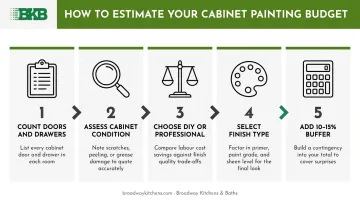
Before you contact a single contractor, run through this framework to anchor your expectations:
- Count every door and drawer front — this is your primary cost variable
- Assess cabinet condition honestly — grease buildup or surface damage will add meaningful prep time and cost
- Decide DIY vs. professional. Your available time, skill level, and tolerance for finish quality all factor in.
- Choose finish type — standard colors cost less than specialty finishes or two-tone work
- Add a 10–15% buffer — for unexpected prep needs or hardware upgrades
Most Common Budgeting Mistakes
- Focusing on paint cost while ignoring that labor typically makes up the largest share of the total bill
- Accepting the cheapest quote without understanding what prep is included
- Underestimating prep time on older, grease-heavy cabinets
- Forgetting hardware replacement and touch-up supplies
Tips to Keep Costs Reasonable
- Get 2–3 quotes and compare what's included, not just the final price
- Handle basic prep yourself (removing hardware, cleaning surfaces) to reduce billable hours
- Stick to standard colors if the budget is tight — specialty finishes add cost without adding durability
- Schedule during slower seasons when contractors may have more flexibility on pricing
Frequently Asked Questions
How much should I pay to have my kitchen cabinets painted?
Most homeowners pay between $425 and $3,353 for professional cabinet painting, with averages around $941 to $2,164 depending on project scope. Cost varies based on cabinet count, surface condition, finish type, and your location — metro areas like NYC run higher than national averages.
Is it cheaper to paint your kitchen cabinets or replace them?
Painting is far cheaper — often $941 vs. $5,000+ for new cabinets in a comparable kitchen. Replacement becomes the better investment when cabinets are structurally damaged, the style is fundamentally outdated, or the homeowner needs new features like custom sizing or soft-close hardware.
Is it better to spray paint or brush paint kitchen cabinets?
Spray application produces a smoother, more consistent finish without brush marks — it's the professional standard for a reason. Brush-and-roller is more accessible for DIY but risks visible texture in the finish. The practical trade-off: a quality sprayer runs $300–$600 to purchase or $50–$100/day to rent, plus the skill curve to avoid overspray and drips.
How long does it take to paint kitchen cabinets professionally?
A professional crew typically completes a cabinet painting project in 3–5 days, including prep, painting, and reassembly. DIY projects take a weekend or two of active work — plus up to three weeks of cure time before the finish reaches full hardness.
How long does paint on kitchen cabinets last?
Longevity depends heavily on prep quality, coating type, and household traffic. Professional-grade waterborne alkyds and 2K coatings hold up far longer than standard interior wall paints. A quality professional job on well-prepped cabinets typically lasts 8–15 years with routine cleaning and the occasional touch-up.
What type of paint finish is best for kitchen cabinets?
Semi-gloss and satin finishes are the most practical — durable, easy to wipe clean, and widely available in cabinet-specific formulations. Professional-grade options like Benjamin Moore Advance (waterborne alkyd) or Sherwin-Williams Emerald Urethane Trim Enamel offer measurably harder finishes than standard interior wall paints.